The gallery of Roman portraits in the Vasari Corridor

In the systematic reorganisation of the Uffizi Gallery, carried out between 1780 and 1782, Abbot Luigi Lanzi played a leading role. This pioneer of modern archaeology was also responsible for the rearrangement of the series of Roman portraits in the three corridors of the Uffizi, which, thanks to the work of the Abbot from the Marche region, increased both in the number of works and in the quality of the pieces. Choosing the best that the antique market and the grand ducal collections could offer, scattered among the numerous villas and offices of official representation, Lanzi added over forty marbles to the seventy already present in the Gallery, giving rise to a collection of Roman portraits that had few equals in Italy and Europe. Since 1996, the refurbishment of the Gallery' corridors has restored the furnishings of the ancient sculptures in the three corridors to their appearance as documented in the “Atlante di Galleria”, coordinated by Abbot De Greyss in the mid-eighteenth century. This museological choice meant that the portraits chosen by Lanzi, added at a later time than that documented by the drawings of the “Atlante”, were removed from the exhibition spaces to be placed in the storage rooms.
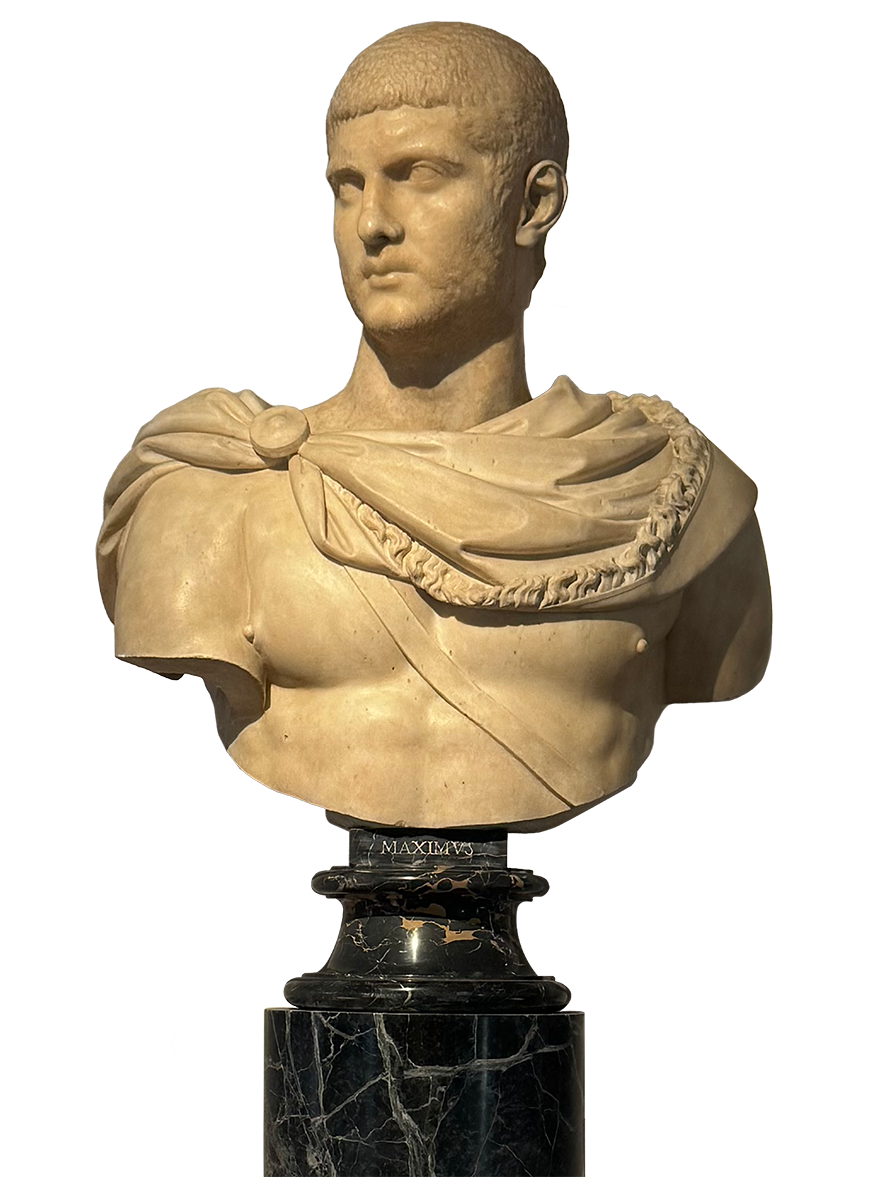
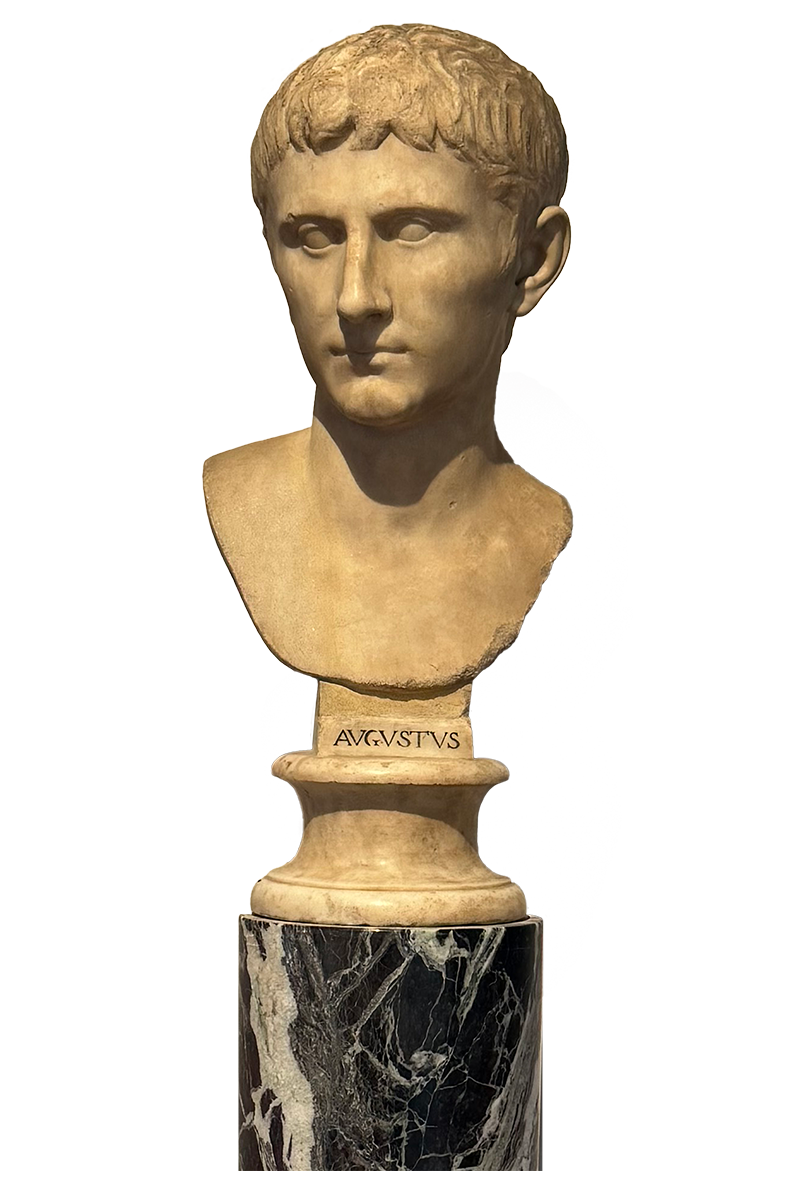
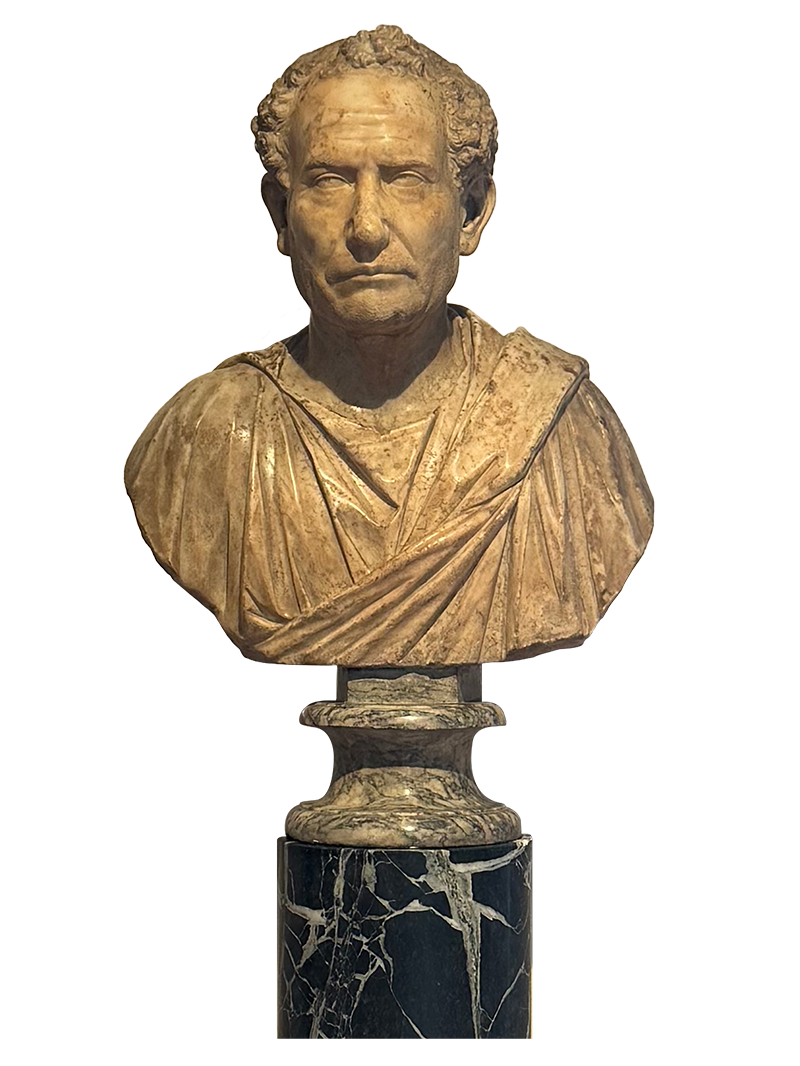
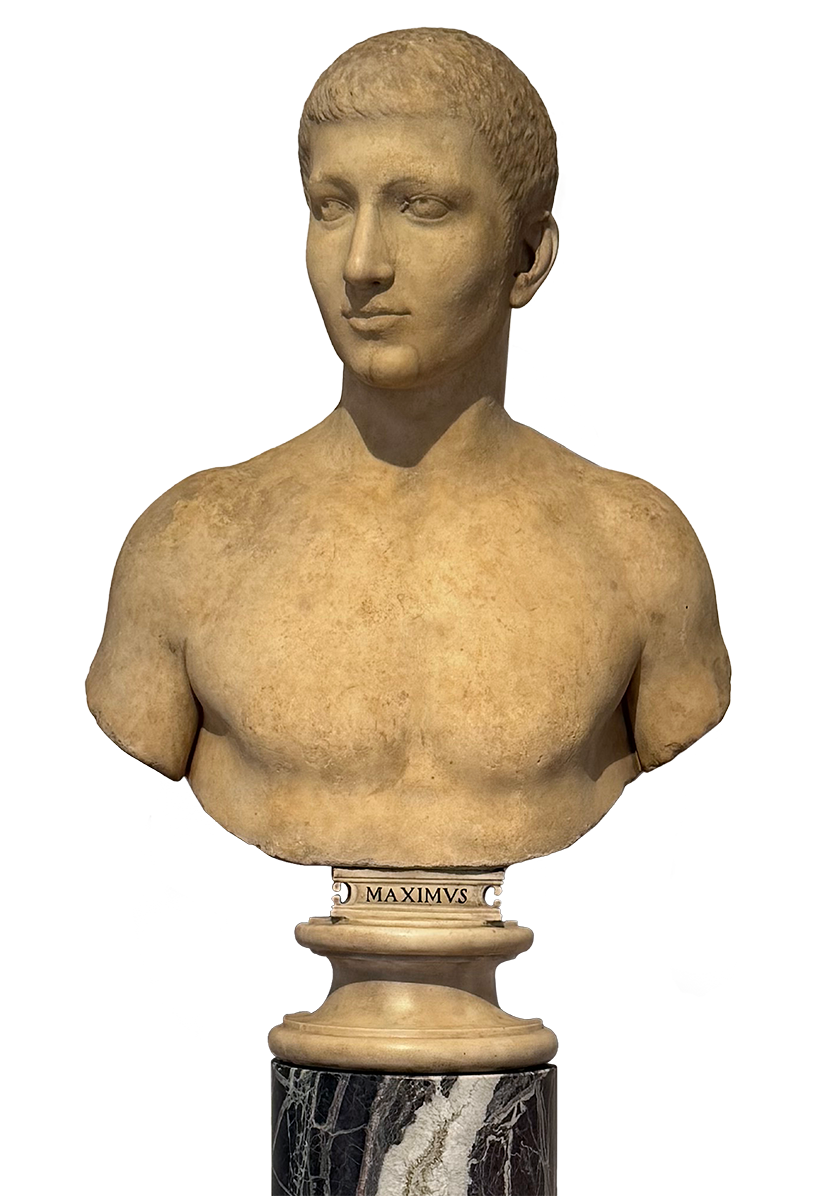
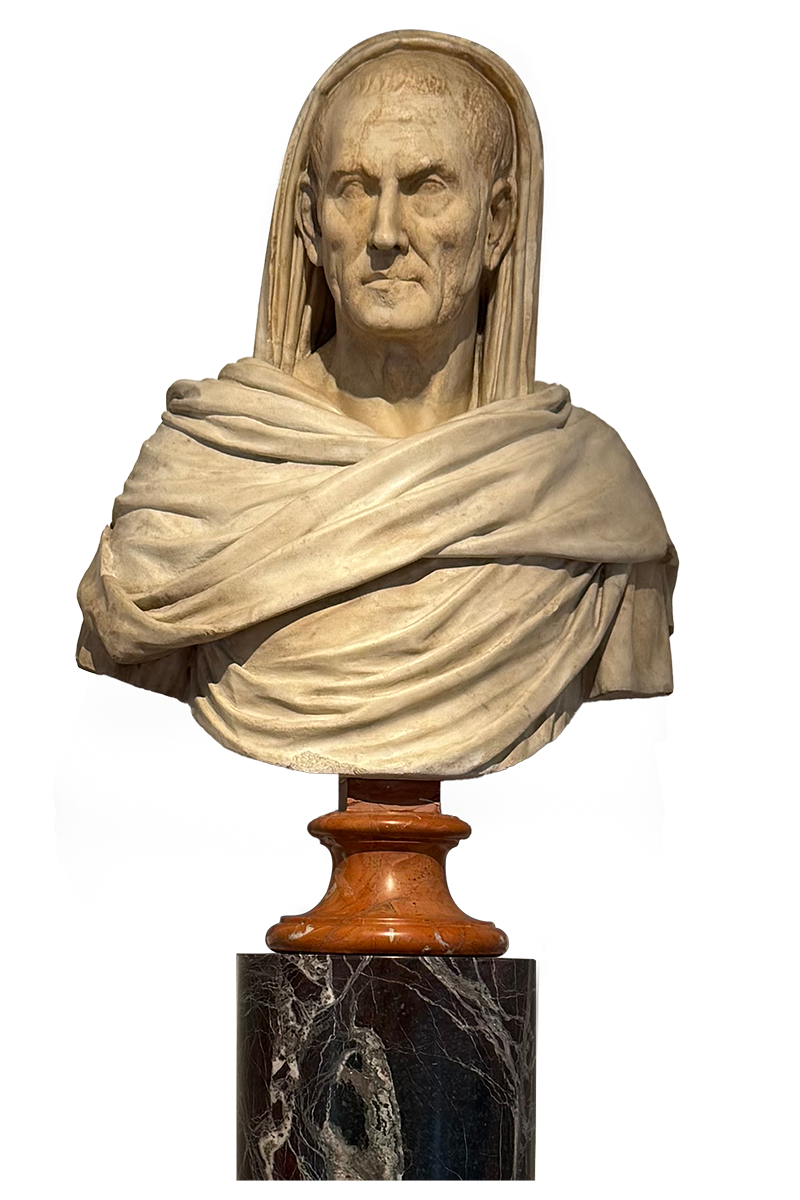
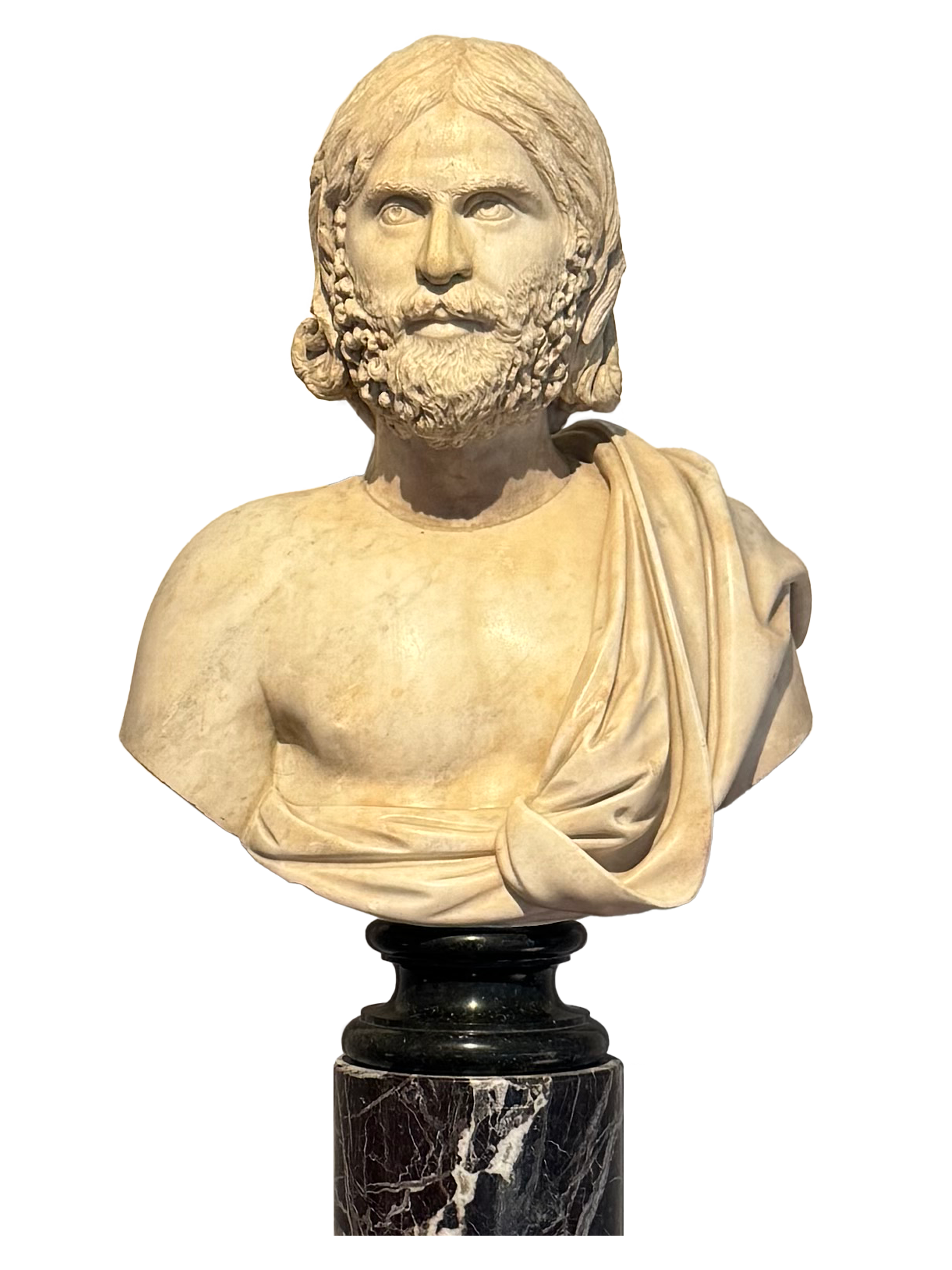
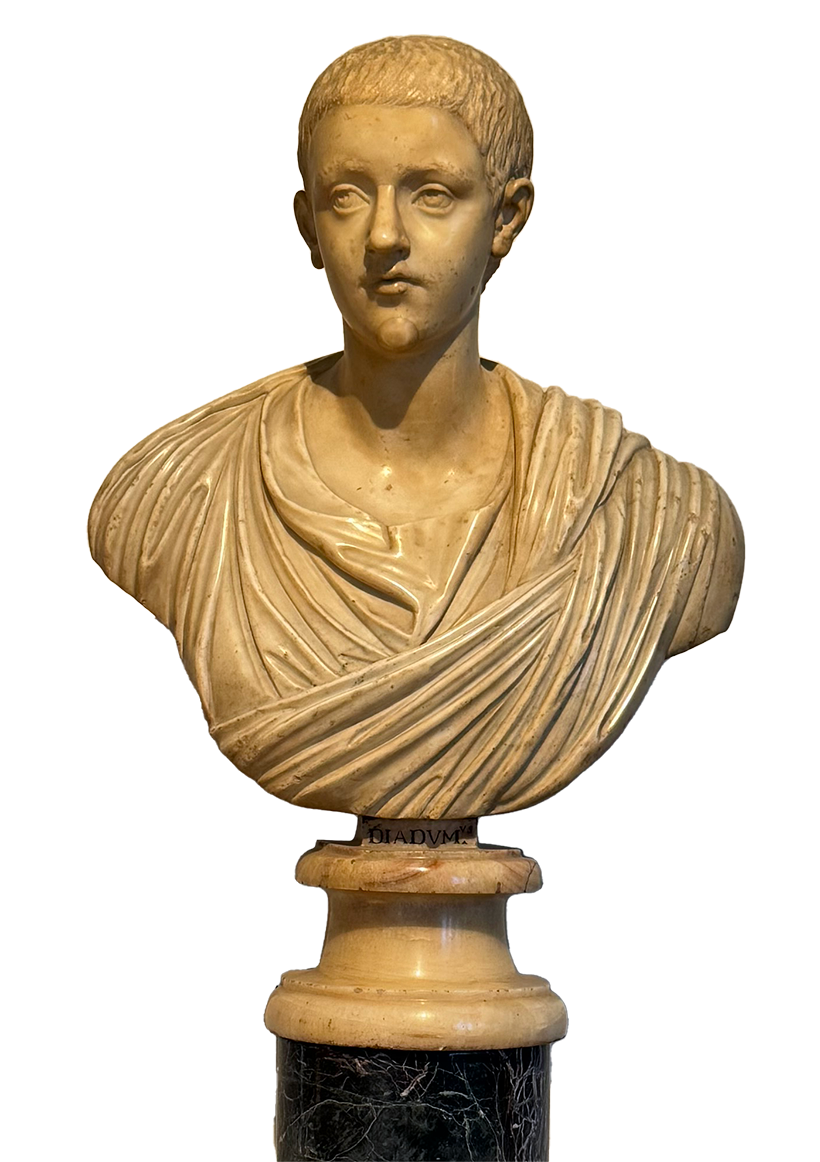
Thus, the exquisite portraits scrutinised with great attention by the Marches-born Abbot were not excluded from tour itineraries because they were deemed expendable, duplicate, or due to aesthetic considerations or fragile conservation status. Rather, in an almost paradoxical twist, the Uffizi deposits became home to significantly important marbles - carefully selected masterpieces from Villa Medici in Rome, the grand ducal palaces, and the premier private collections in Florence. Only the curatorial choices made in the nineties of the twentieth century put an end to the collection conceived by Lanzi, whose richness and importance are well understood from the choice of these forty-seven works now arranged in the section of the Vasari Corridor that runs over Ponte Vecchio, where, after decades of neglect, they have finally returned to the full enjoyment of the public. In fact, these marbles offer an effective and extremely high-quality synthesis of the evolution of Roman portraiture from the late Republic to the Tetrarchic age (end of the first century B.C). – End of the 3rd century A.D.). From examples that still bear the influence of the Italic tradition of exaggerated realism, such as the bust of an elderly man 'velato capite', to portraits swayed by Hellenistic pathos, like the magnificent colossal likeness of Cicero, we arrive at the composed classicism of the Augustan age, perfectly illustrated by a dynamic replica of the Augustus of Prima Porta. The full imperial period is evidenced both by official portraits of exquisite workmanship and by private effigies in which we find echoes of imperial models. As such, the fashion for beards among the Antonine and Severian emperors is directly reflected in heads like that of the so-called 'barbarian', while the preference for more compact and geometric forms is evident in works such as the so-called Maximus or the so-called Diadumenian, both dating back to the early decades of the third century A.D.
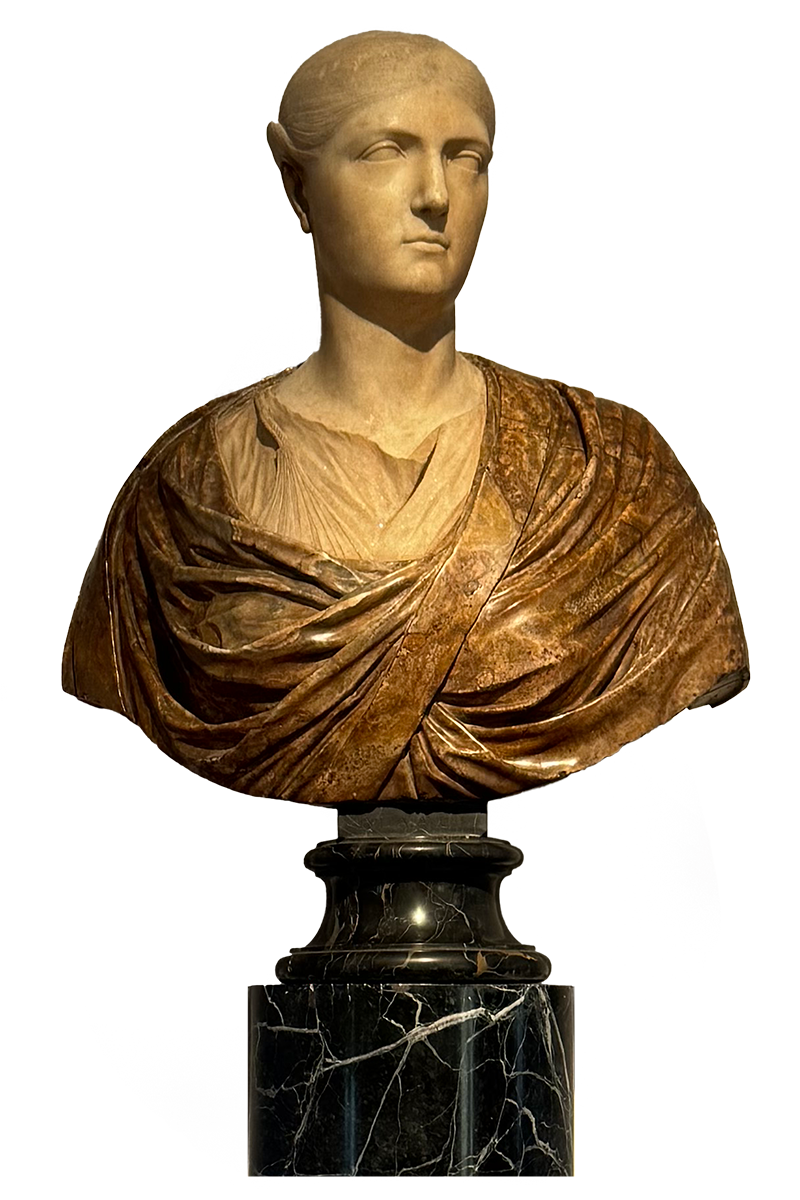
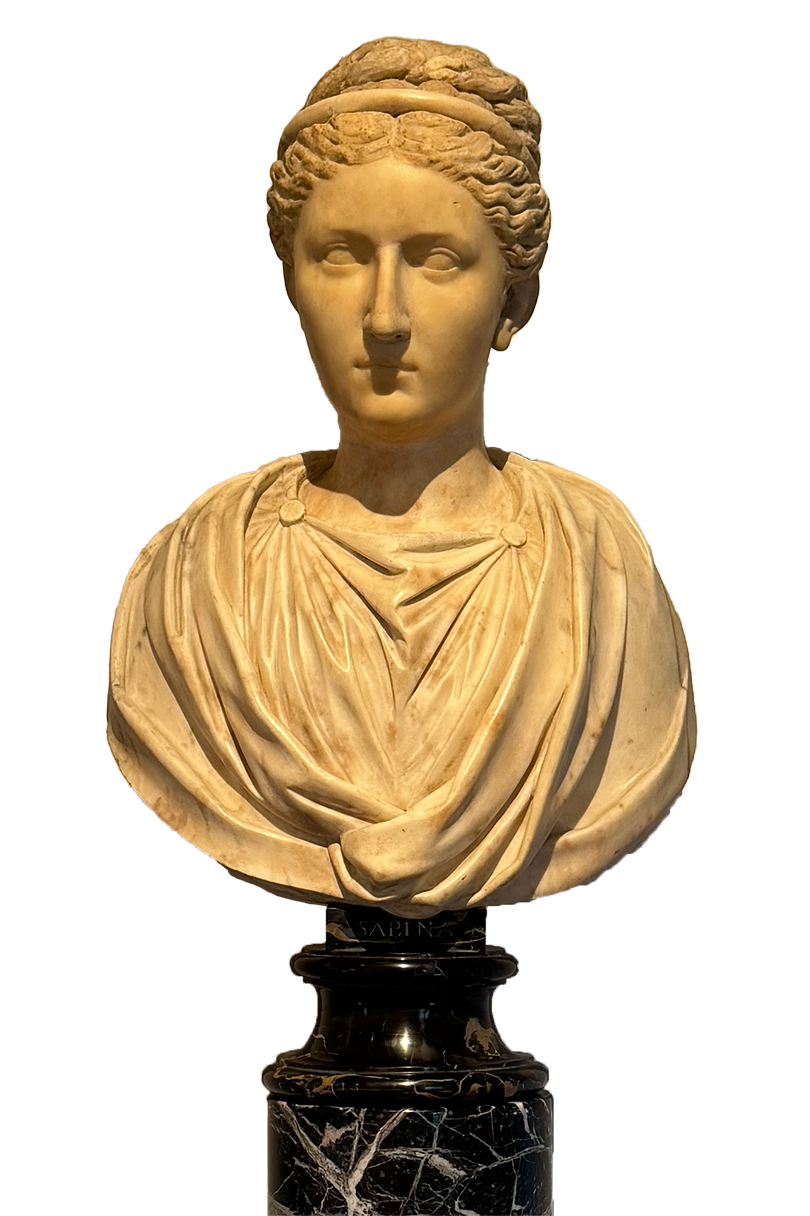
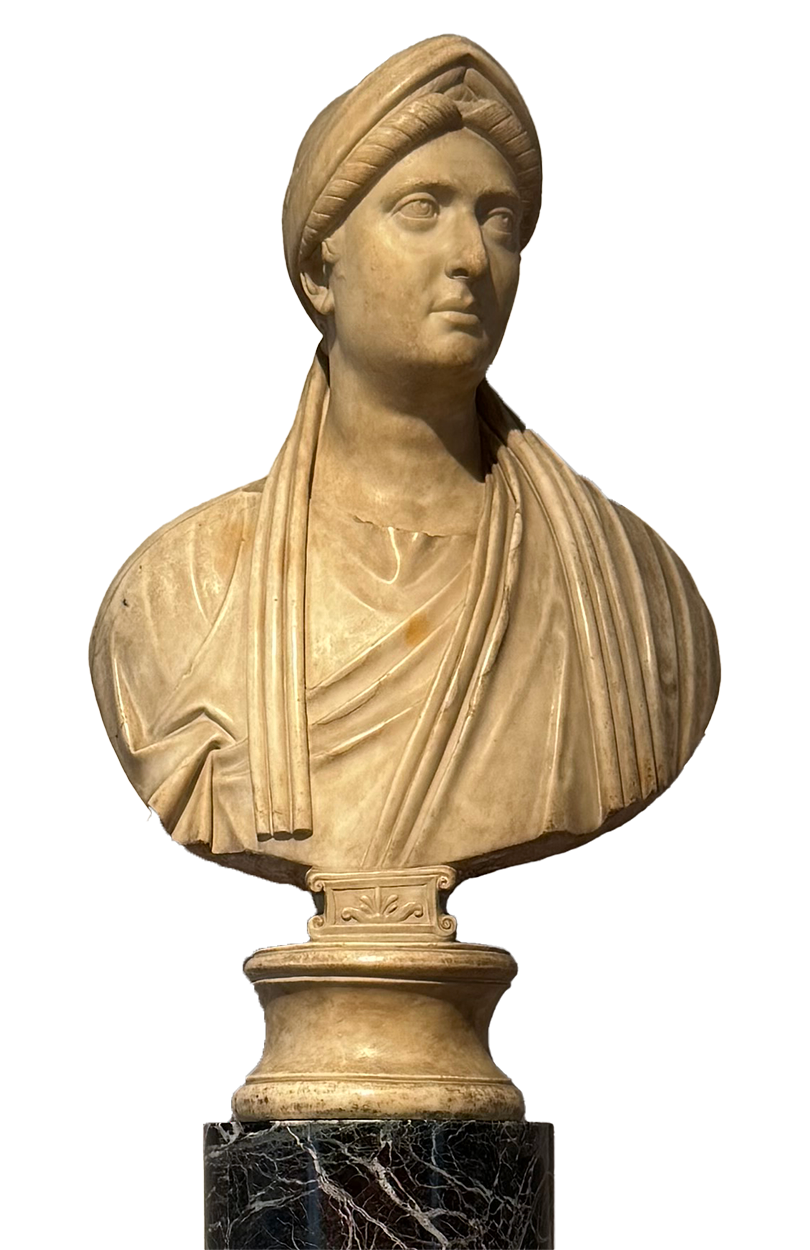
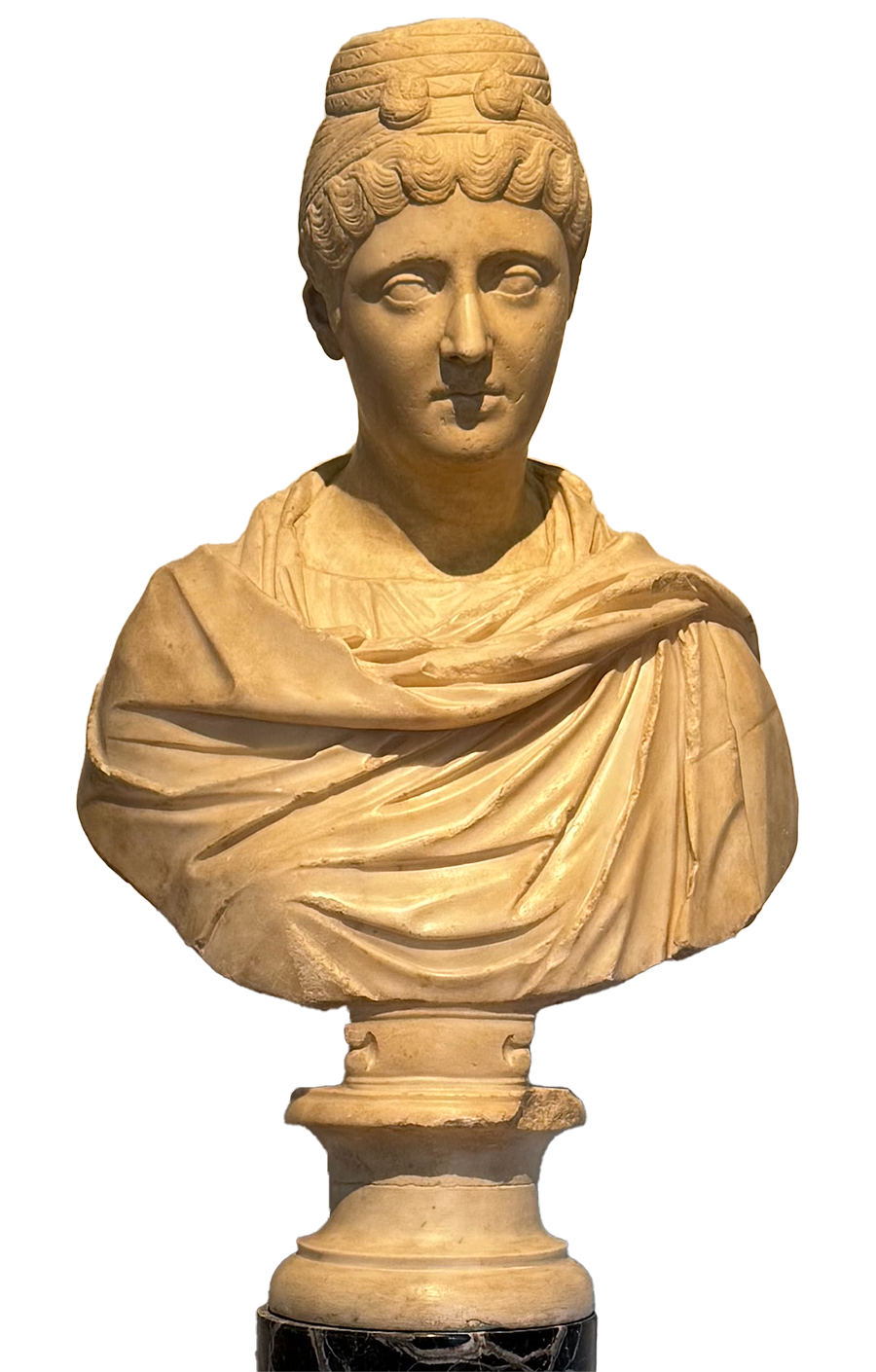
However, it is above all the female portraits of the first and second centuries A.D. that offer some of the best evidence of the stylistic trends of those years. In particular, what stands out is an exceptional bust of a young woman carved around 15 B.C., in the early Augustan age. Beyond the exceptional strength of the portrait and its subtle psychological introspection, the work stands out because the woman is depicted wearing the stole, the heavy garment worn over the tunic, hiding any type of transparency and shape. This choice, inspired by modesty and temperance, was intended to be a tangible demonstration of the fact that the character portrayed was a supporter of the moralising policy of Augustus who, with the laws enacted between 18 and 16 B.C., tried to put a stop to the spread of moral corruption. In the series of female portraits, moreover, what stands out is a woman with a solemn appearance and a unique hairstyle. It is a vestal, characterized by the infula, the sacred bandage that surrounds her head. Finally, one cannot help but remember the clear portrait of Sabina, wife of Hadrian (117-138 A.D.), or, again, the refined faces of the Antonine age, true masterpieces of psychological introspection. These works, depicting wealthy ladies who lived in the central decades of the second century A.D., can be dated with a good degree of certainty thanks to the complex hairstyles, which replicate those adopted by the empresses of the period and are evidenced by the coniage.
With the portrait gallery now reconstituted in the Vasari Corridor, the museum regains an important piece of its historical collections. Only now can we fully grasp the meaning behind Luigi Lanzi's words. Discussing the portrait series in the gallery, which he curated, he expressed understandable pride by declaring that “a series up to Gallienus has been assembled, which could almost be described as complete”.
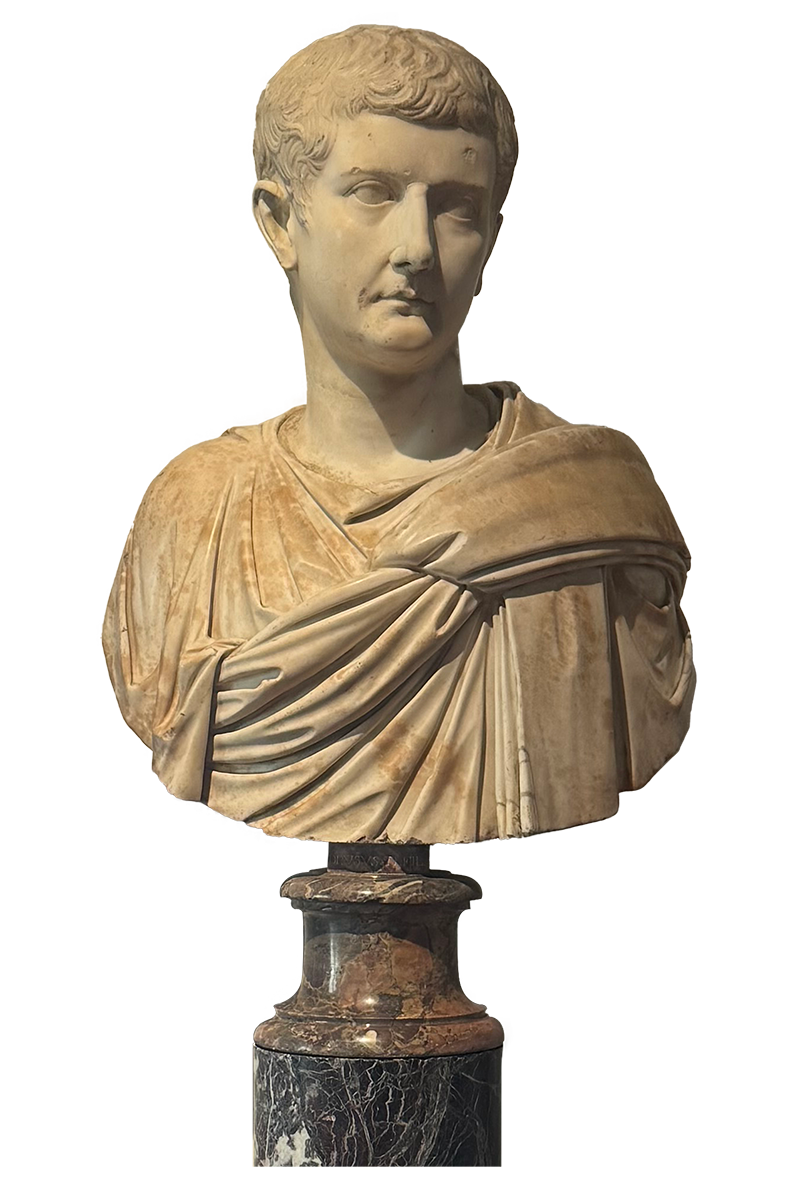
Portrait of an Unknown Man

Inv. 1914 No. 140
End of the 1st century B.C.
statue photo
Originally in the collection of the Marquis Capponi, this head entered the collections of the Uffizi Gallery in 1780. An unknown man is depicted, who has had himself portrayed in adherence to the official imperial portrait types of Tiberius, as demonstrated by the rendering of the hairstyle, strongly indebted to the first official images of the emperor.

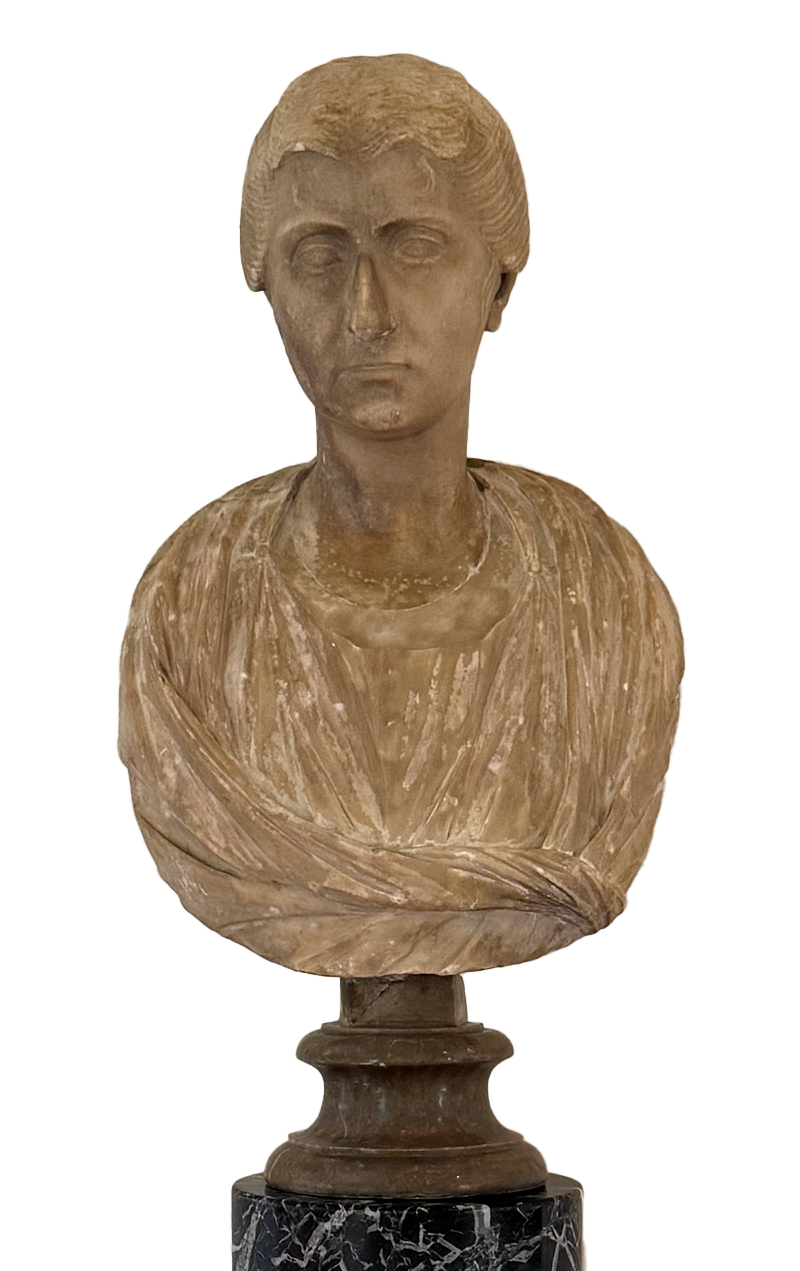
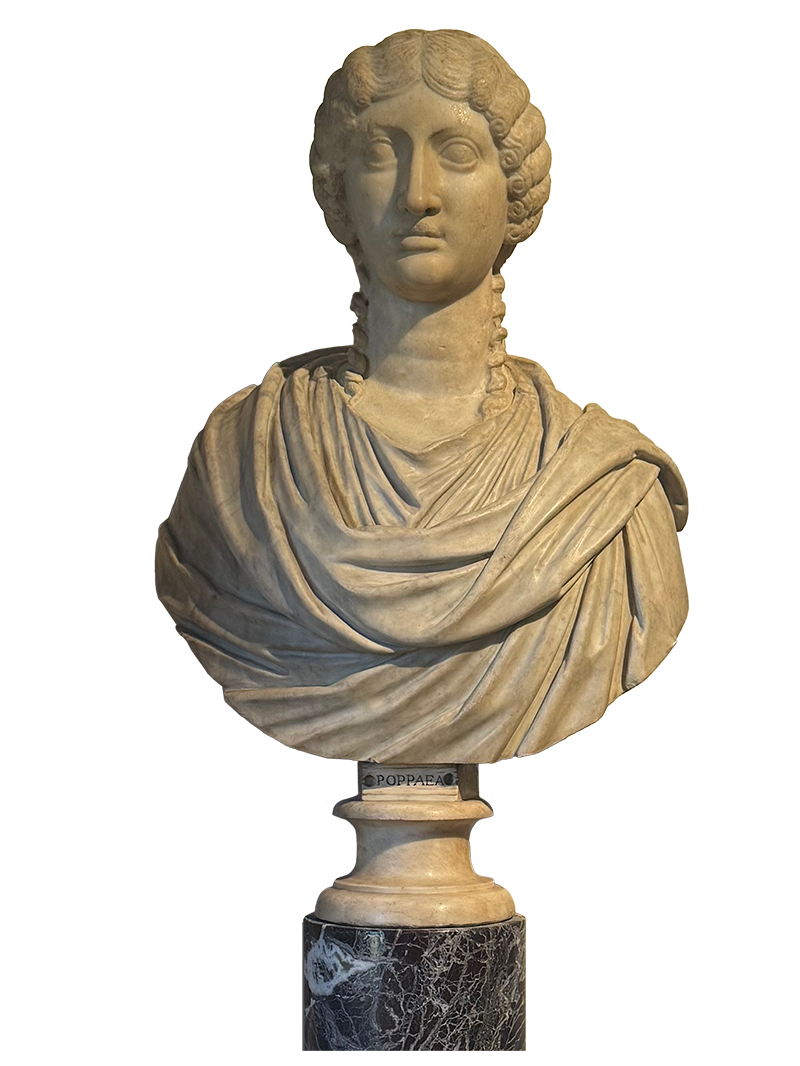
Portrait of the so-called Poppaea

Inv. 1914 No. 103
Mid-first century A.D.
statue photo
The portrait has been included in the grand-ducal collections since the seventeenth century and consists of an ancient head in white marble, restored in the previous century and placed on a sixteenth-century bust in veined marble. The portrait depicts a Roman matron and is almost certainly to be recognized as a work of funerary character, by virtue of the wide open eyes and the fixity of the gaze. Nonetheless, the hairstyle is more representative of a period approximately two decades earlier than the one during which Poppaea, the second wife of Emperor Nero, lived—a connection made by eighteenth-century tradition based on the likeness of this image.

Portrait of the so-called Massimo

Inv. 1914 No. 254
220-230 A.D.
statue photo
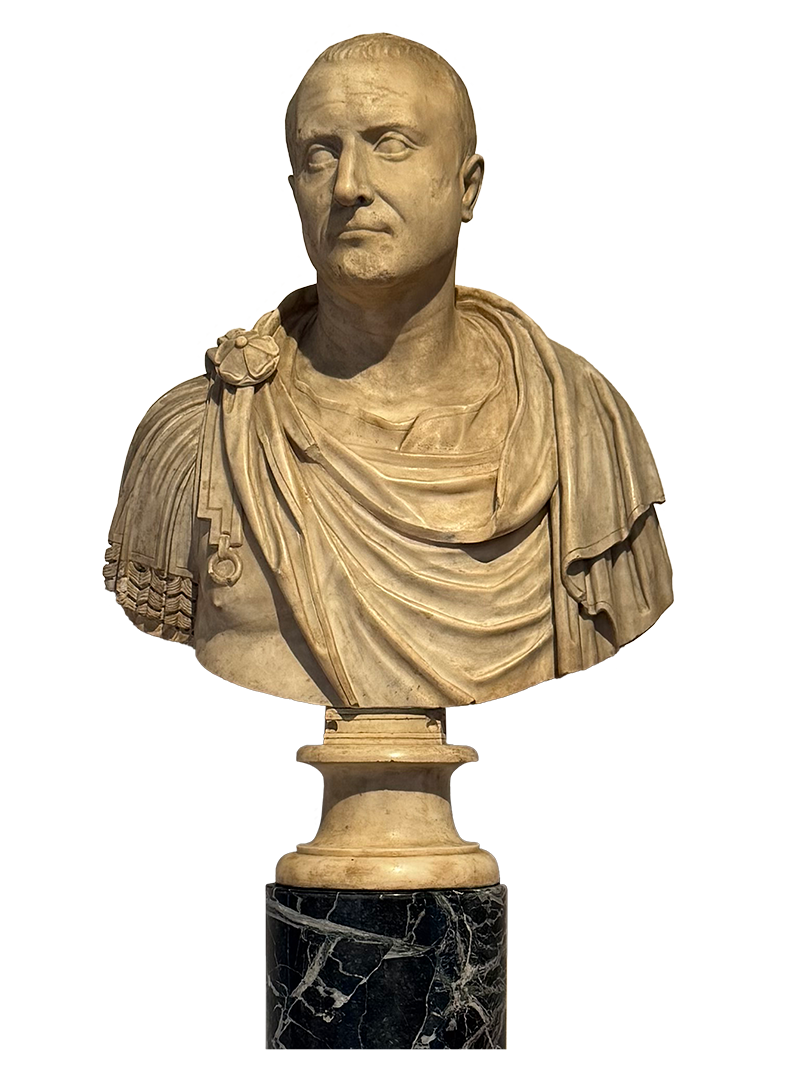
The bust entered the Uffizi Gallery in 1778 together with other works belonging to the collection of Gaspero Gaddi. The powerful portrait, which in the rendering of the hair clinging to the skull and in its essential volume recalls the official portraiture of Alexander Severus, probably depicts a charioteer, as evidenced by a replica that still retains traces of the reins on the chest.

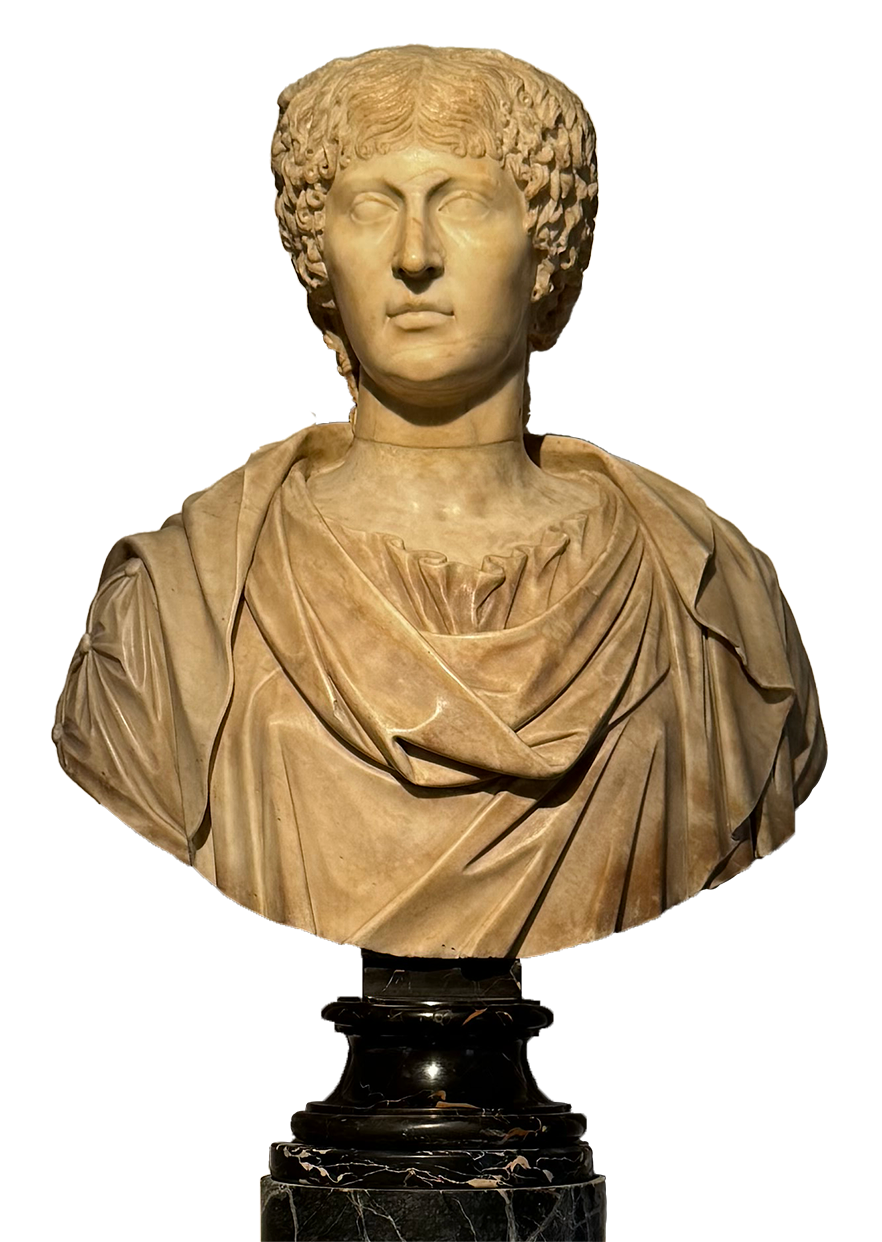
Portrait of an Unknown Woman

Inv. 1914 No. 96
End of the 1st century B.C.
statue photo
This splendid portrait of an unknown woman is characterised by the stole worn by the young woman. The robe, recognisable by the slightly elevated tie over the right shoulder, was a garment that served to cover the transparency of the tunic and testifies to how the person portrayed supported Augustus' moralising policy, embodied in the laws of 18-16 B.C.

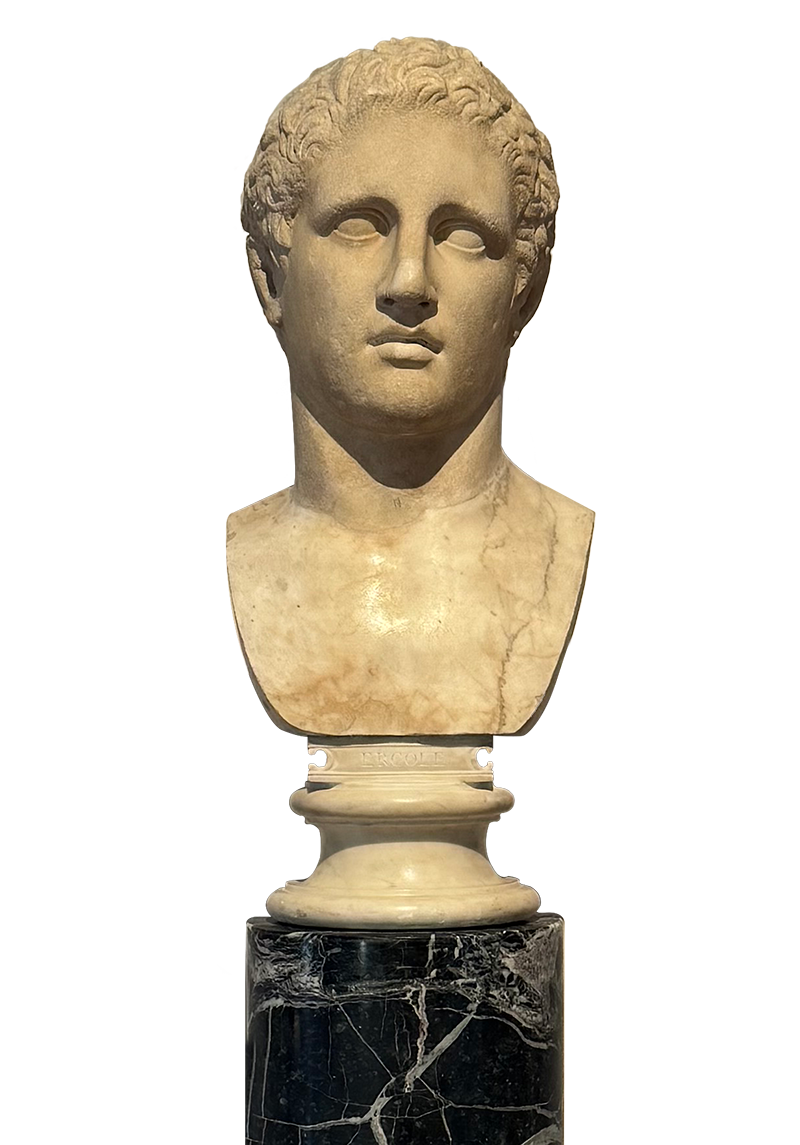
Head of Heracles Lansdowne type

Inv. 1914 No. 55
1st century A.D.
statue photo
The portrait, part of the grand-ducal collections since the seventeenth century, features an ancient white marble head, which was restored in the previous century and set upon a sixteenth-century veined marble bust. The work depicted Heracles standing with, in his right hand, the remains of the Nemean lion, the first of the trials faced by the Argive hero. The treatment of the hair, carefully finished with a chisel, suggests dating the work still to the first century A.D.

Portrait of Augustus

Inv. 1914 No. 81
Beginning of the 1st century A.D.
statue photo
By the end of the sixteenth century, this portrait had made its way to Florence, representing an exemplary instance of the most successful type in the depiction of Caesar's adopted son, the 'Prima Porta' portrait, conceptualised when Octavian was awarded the title of Augustus in 27 B.C. Formal details allow us to consider it a posthumous work and to relate it to the Tiberian period.

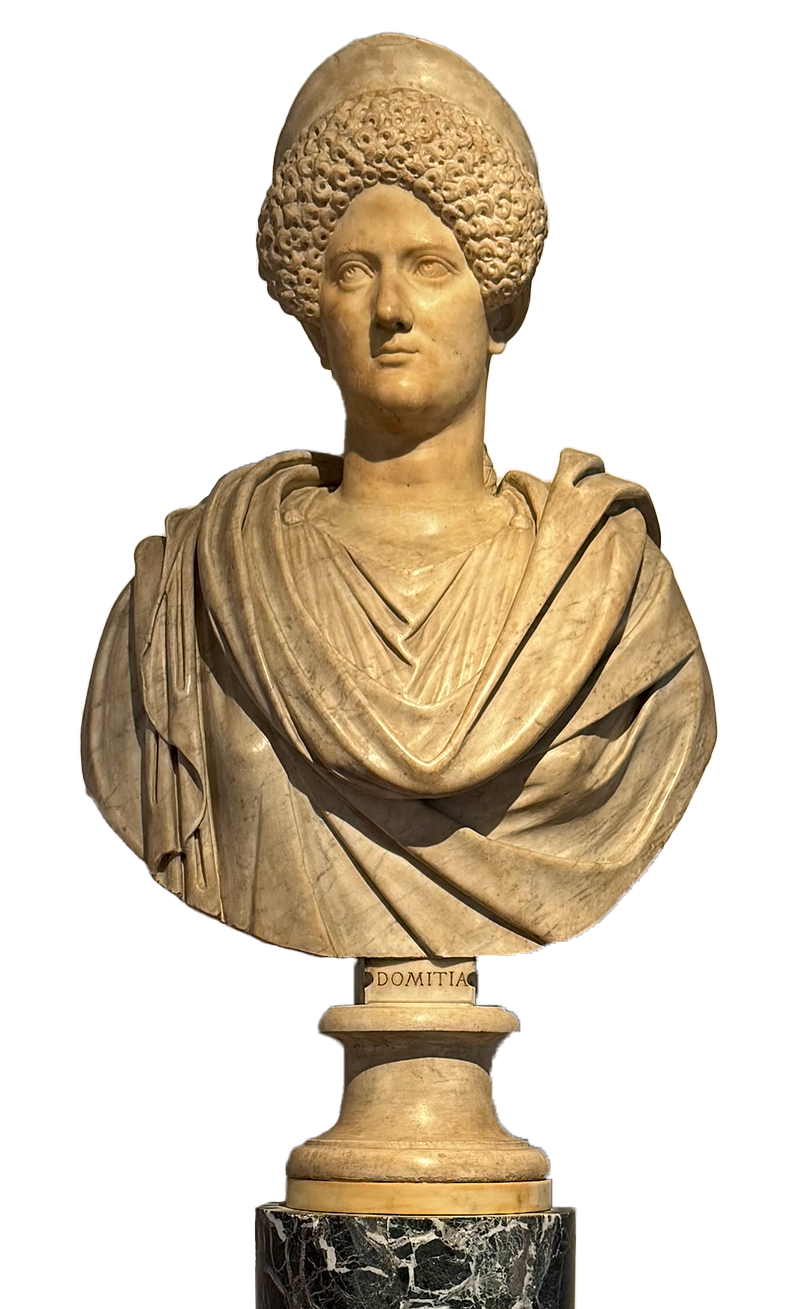
Portrait of Domizia

Inv. 1914 No. 118
End of the 1st century A.D.
statue photo
This head, which came from the Villa Medici to Florence in 1780, depicts Domitia, the wife of Emperor Domitian, in analogy with the second known portrait type for this empress, made between A.D. 81 and 84.

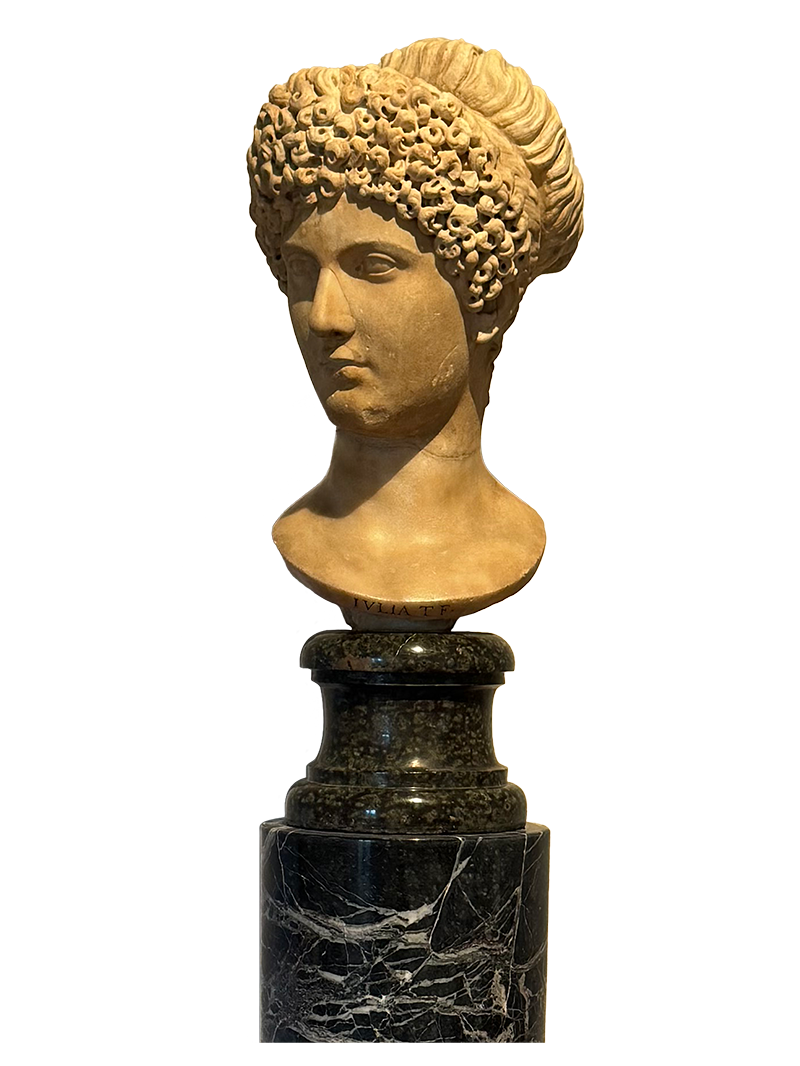
Portrait of the so-called Giulia, daughter of Titus

Inv. 1914 No. 116
Beginning of the 2nd century A.D.
statue photo
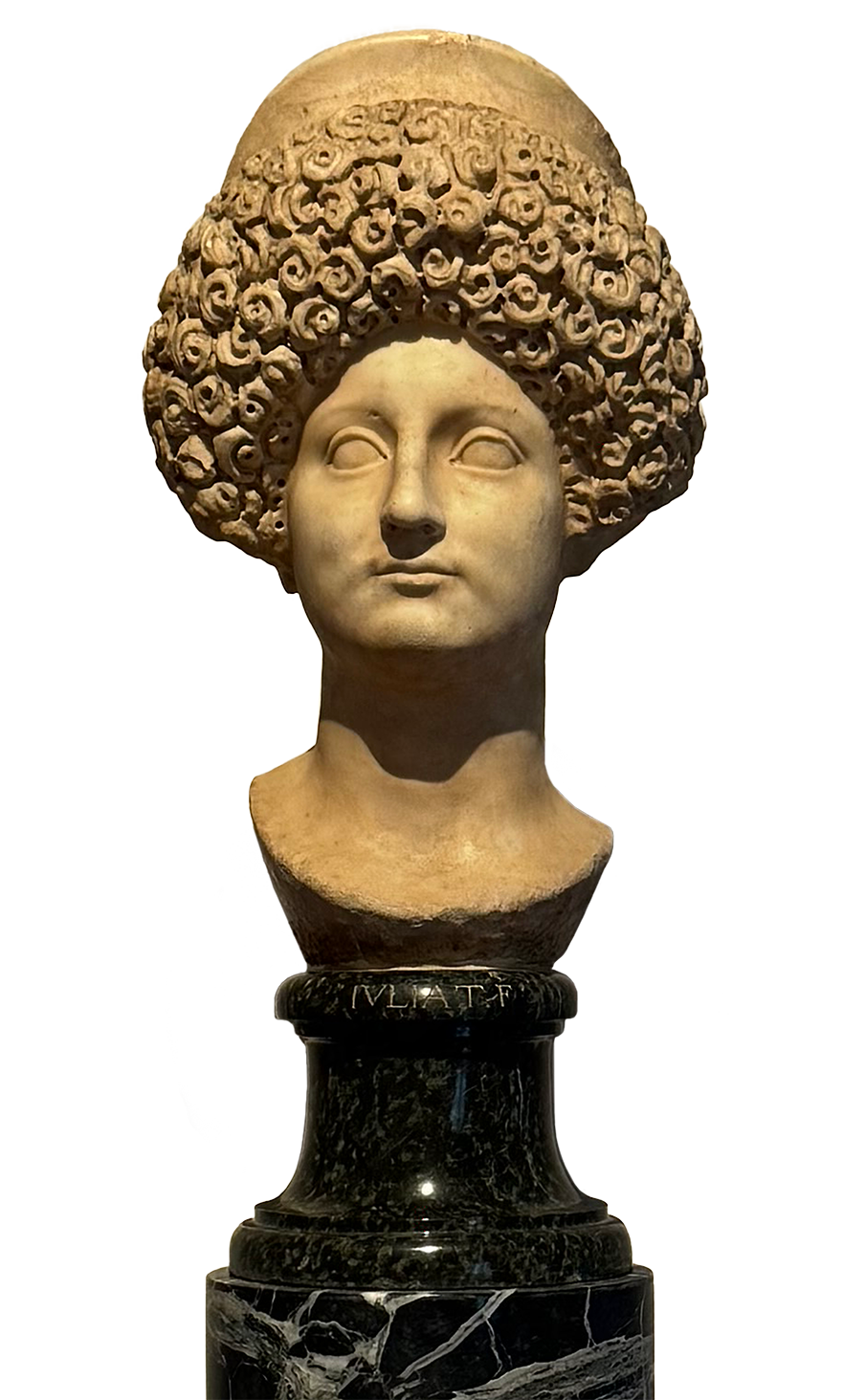
The portrait, registered in the Gallery since the mid-eighteenth century, shows the face of a young woman mistakenly identified as Julia, the daughter of Emperor Titus, and characterised by an elaborate hairstyle. The complex system of curls that frames the forehead is still influenced by the fashions of the Flavian age (late first century A.D.), now tempered, however, by the emergence of a more sober taste that will characterise the first decades of the following century.

Portrait of an Unknown Man

Inv. 1914 No. 395
Mid-first century B.C.
statue photo
Probably coming from Villa Medici, the work only reached the Gallery at the end of the eighteenth century. This portrait of an unknown man is stylistically linked to the latter half of the first century B.C. It aligns with the emotive trend of heightened realism characteristic of that era, exemplified most notably by the 'Pisa-Chiaramonti' portrait of Caesar.

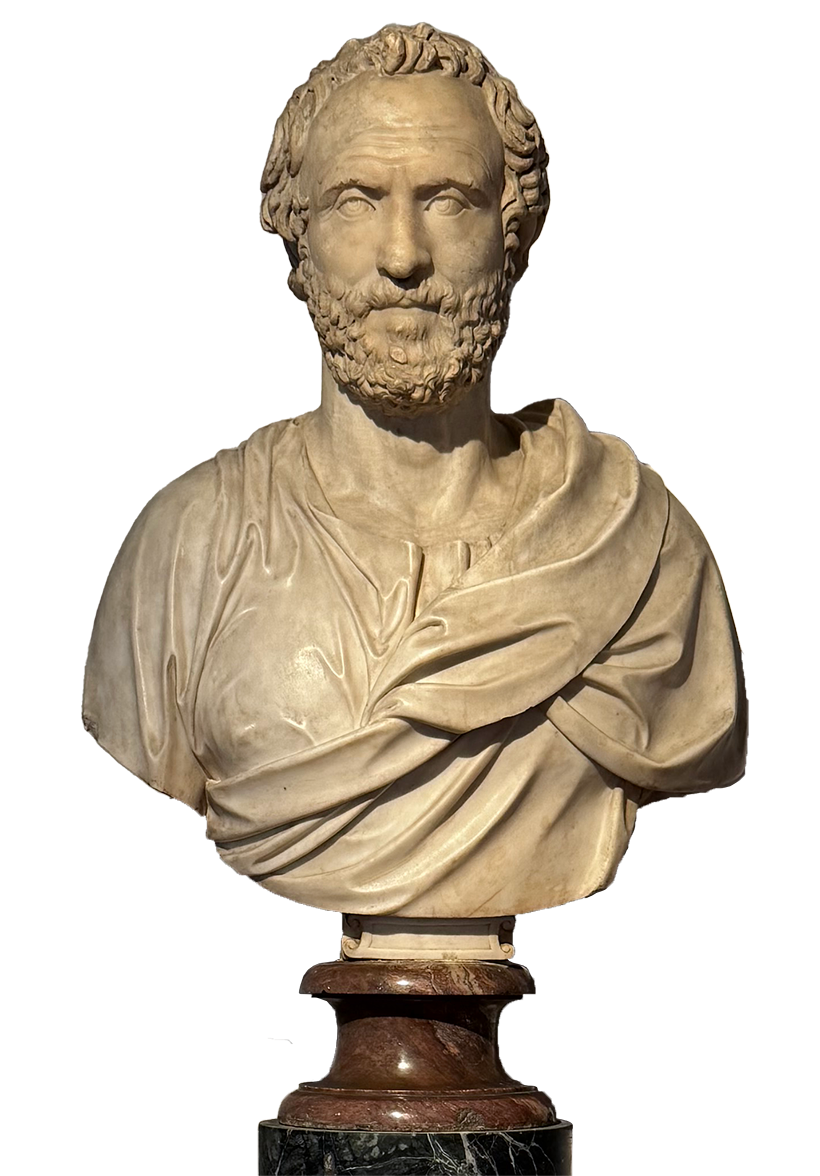
Portrait of the so-called Scipio

PO 1911 n. 650
End of the 18th century
statue photo
The bust, the work of an unknown Tuscan sculptor from the end of the eighteenth century, is inspired by an iconographic type from the Roman era attested by at least two other examples in the grand-ducal collections. In this portrait, with its sharp and stern features, the likeness of Scipio Africanus has been identified, although it is more probable that these are depictions of Isian priests, distinguished precisely by their completely shaven heads.

Portrait of a Man

Inv. 1914 No. 286
Second quarter of the 2nd century A.D.
statue photo
Purchased from the Niccolini collection in 1824, the portrait is an excellent example of the taste for a sometimes merciless descriptive realism that characterised portraiture in the early decades of the second century A.D. A portrait at the Capitoline Museums, dated to the first decades of the second century, offers a particularly close comparison from both an iconographic and stylistic point of view.

Portrait of a Young Girl

Inv. 1914 No. 75
Mid 2nd century A.D.
statue photo
Registered in the Gallery since 1704, the marble, mistakenly identified as a likeness of Emperor Galba, should instead be viewed as the portrait of an unknown individual from the time of Trajan, as suggested by the hairstyle and its stylistic execution. The 'tower' type of hairstyle finds its most persuasive comparisons in the early Antonine age, allowing a similar chronology to be assumed for this work.

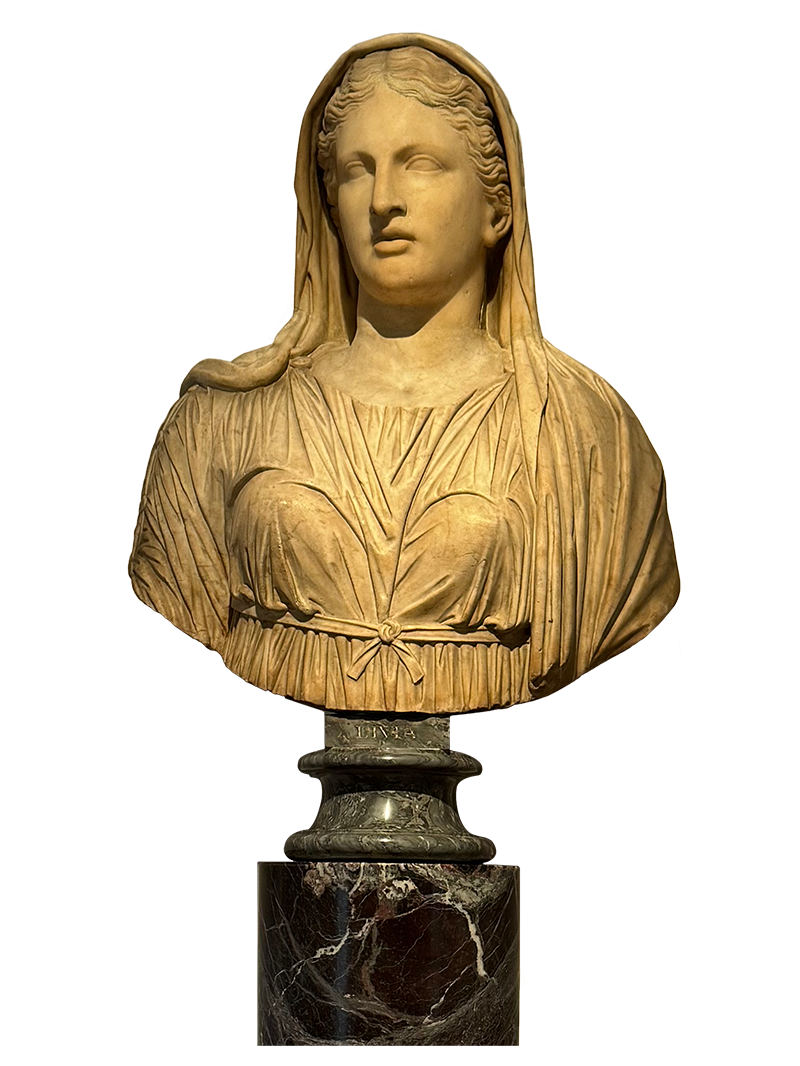
Head of divinity, so-called Vestal

Inv. 1914 No. 88
1st century A.D.
statue photo
In this solemn female bust one recognised, in the past, an effigy of Livia, the wife of Augustus, or that of a Vestal. The strongly idealised features of the face betray the derivation from a late classical prototype (late fourth century B.C.), perhaps depicting Cybele or another deity of the Eleusinian circle.

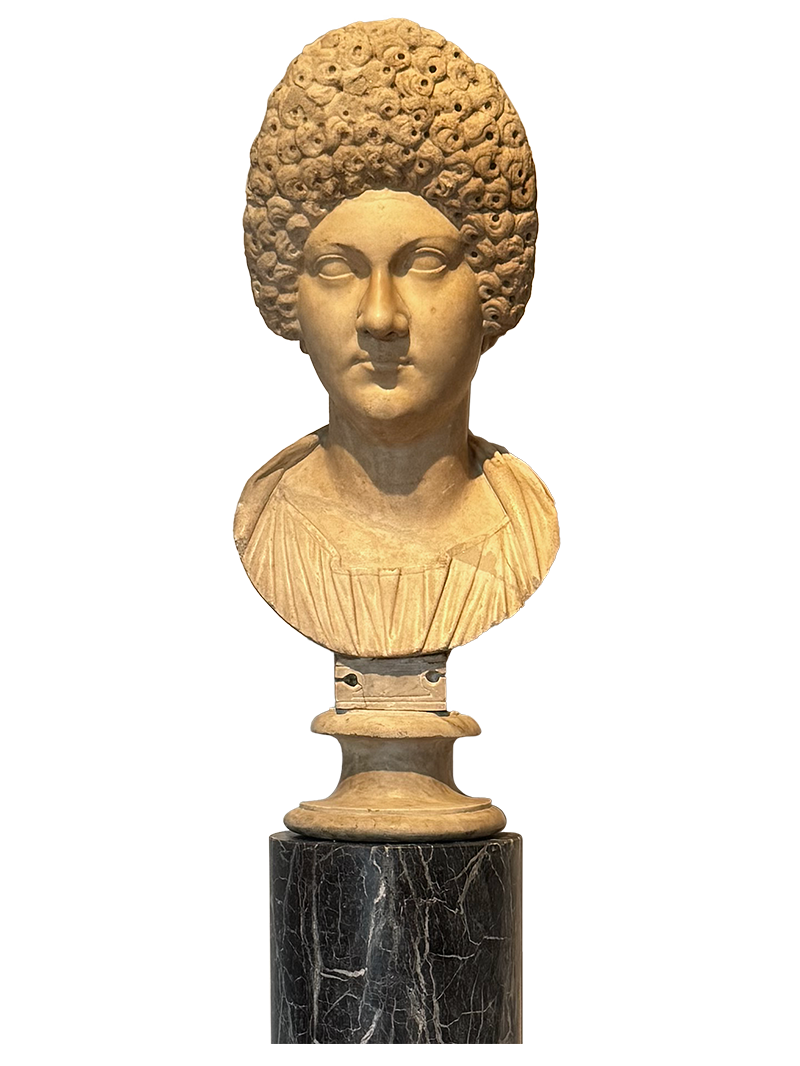
Portrait of the so-called Domitia

Inv. 1914 No. 133
End of the 1st century A.D.
statue photo
This smaller-than-life-size bust, presumably created for funerary use, is a portrait of a woman who lived during the Flavian era. The type of hairstyle, characterised by a tall, curly wig conventionally described as a 'honeycomb', finds its most direct comparisons in the official portraiture of Domitia, wife of Emperor Domitian, with whom she was mistakenly identified in the past.

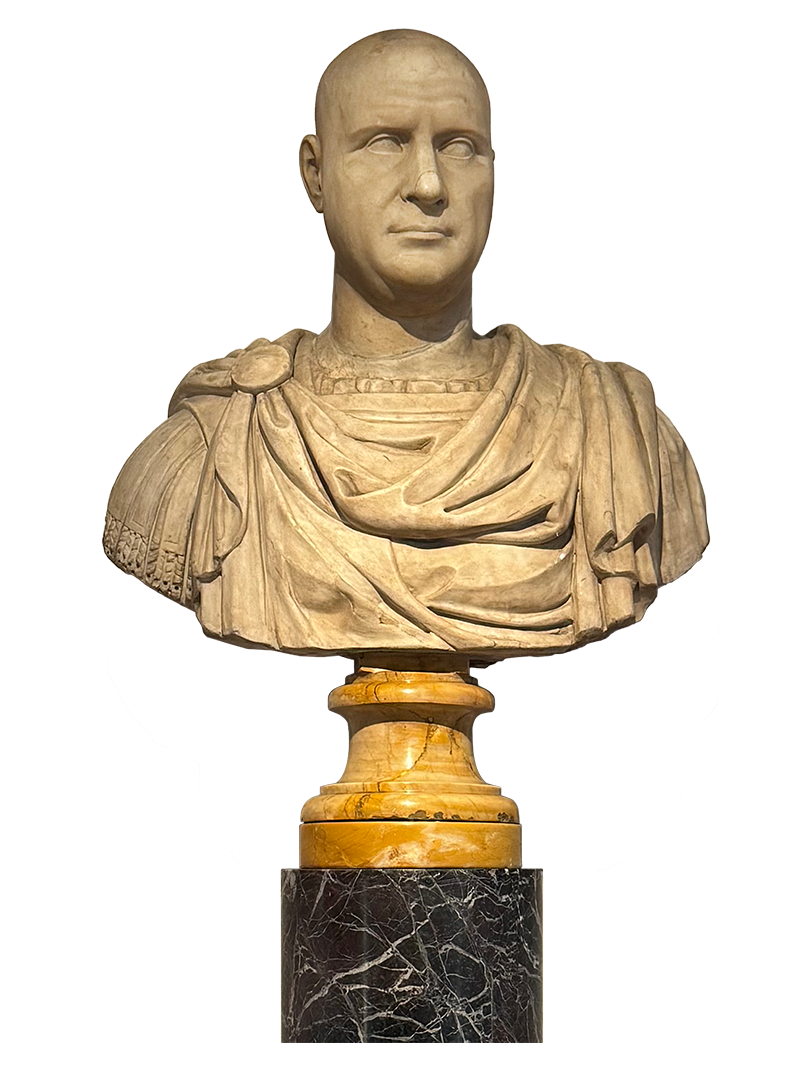
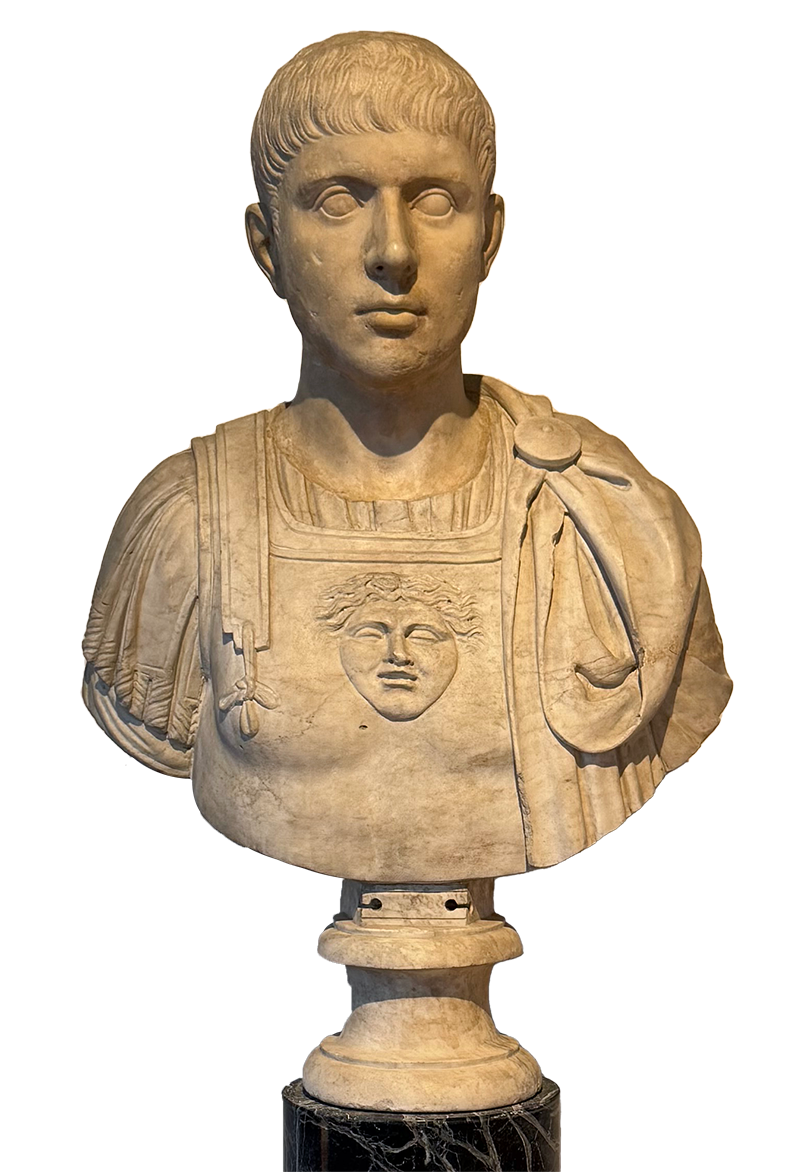
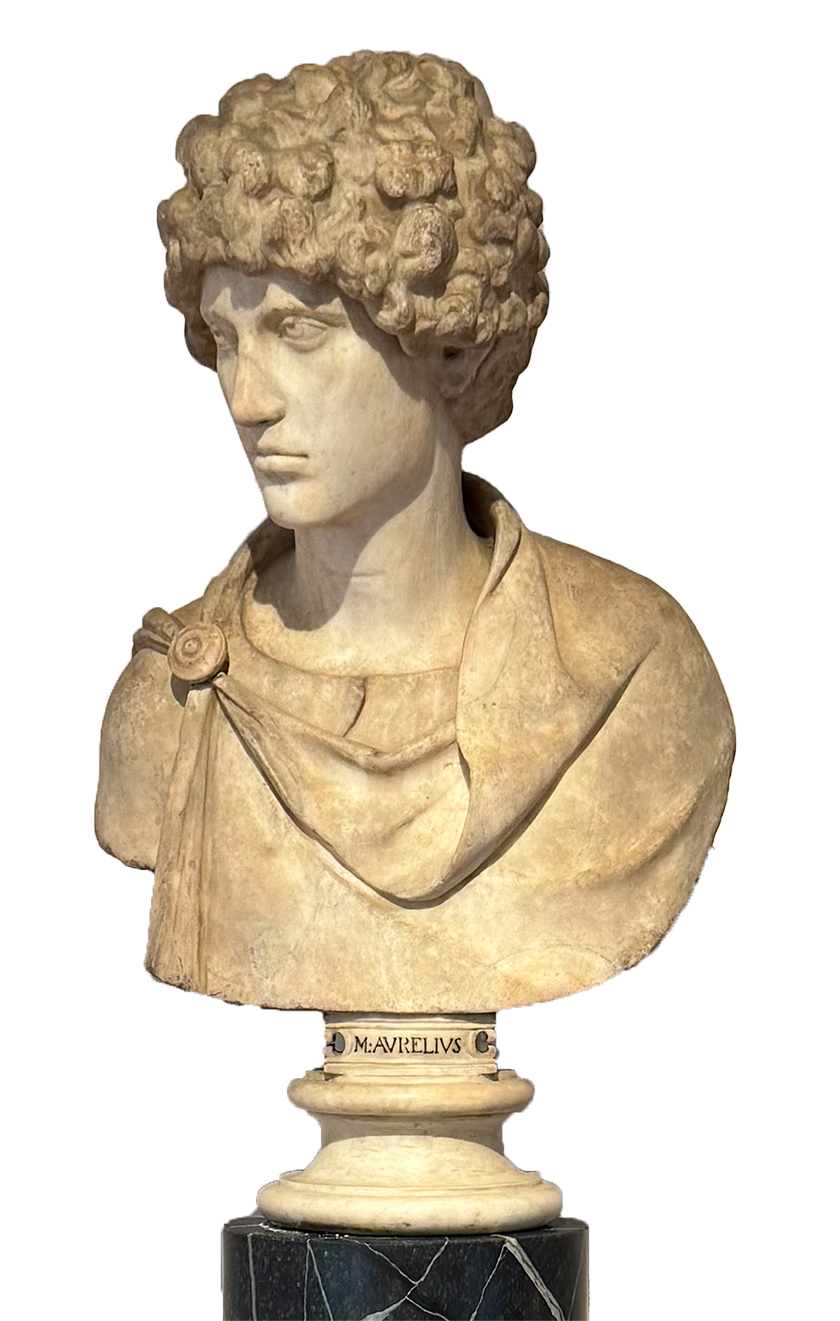
Portrait of the so-called Maximus

Inv. 1914 No. 255
220-240 A.D.
statue photo
Coming from the Villa of Pratolino, the bust entered the Gallery only in 1778. Traditionally considered a portrait of the son of the short-lived emperor Maximinus Thrax, who ascended to the imperial purple in 236 A.D., this marble should instead be recognised as depicting an anonymous young man portrayed in heroic nudity. The hairstyle indicates it dates back to the reign of Severus Alexander.

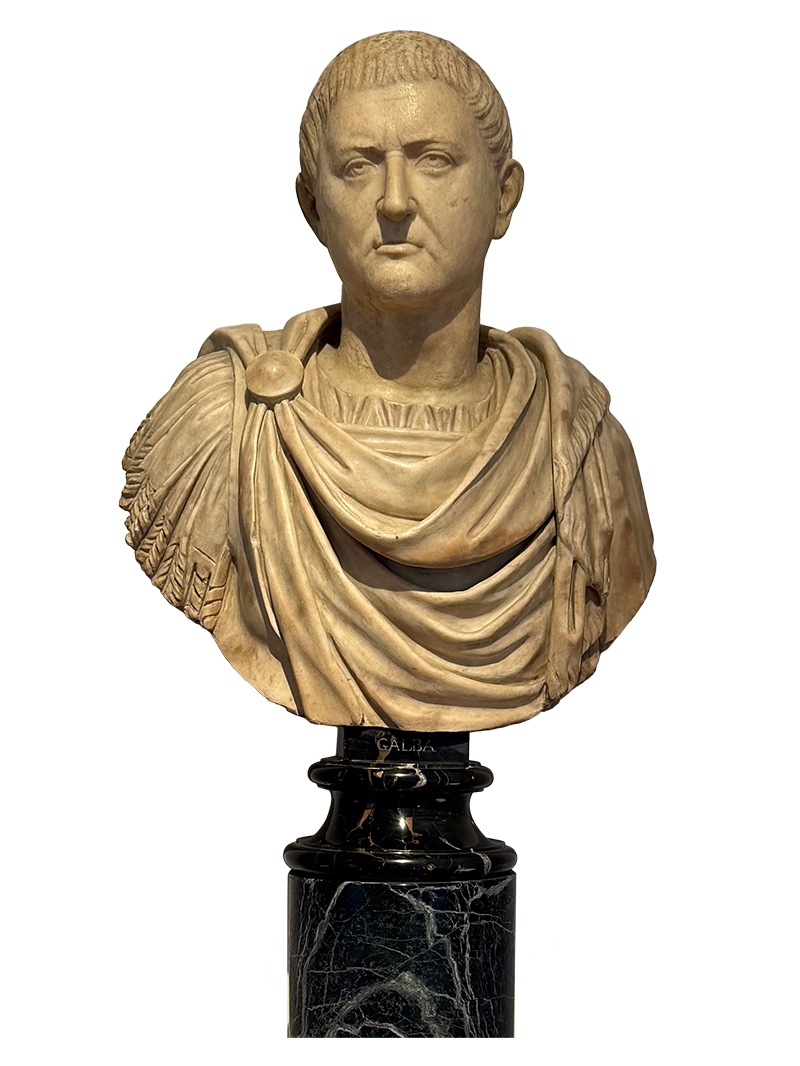
Portrait of the so-called Galba

Inv. 1914 No. 105
Second quarter of the 2nd century A.D.
statue photo
Registered in the Gallery since 1704, the marble, erroneously identified as an effigy of the Emperor Galba, is rather to be considered the portrait of an anonymous person who lived in the age of Trajan, the age to which the type of hairstyle and its formal rendering refer.

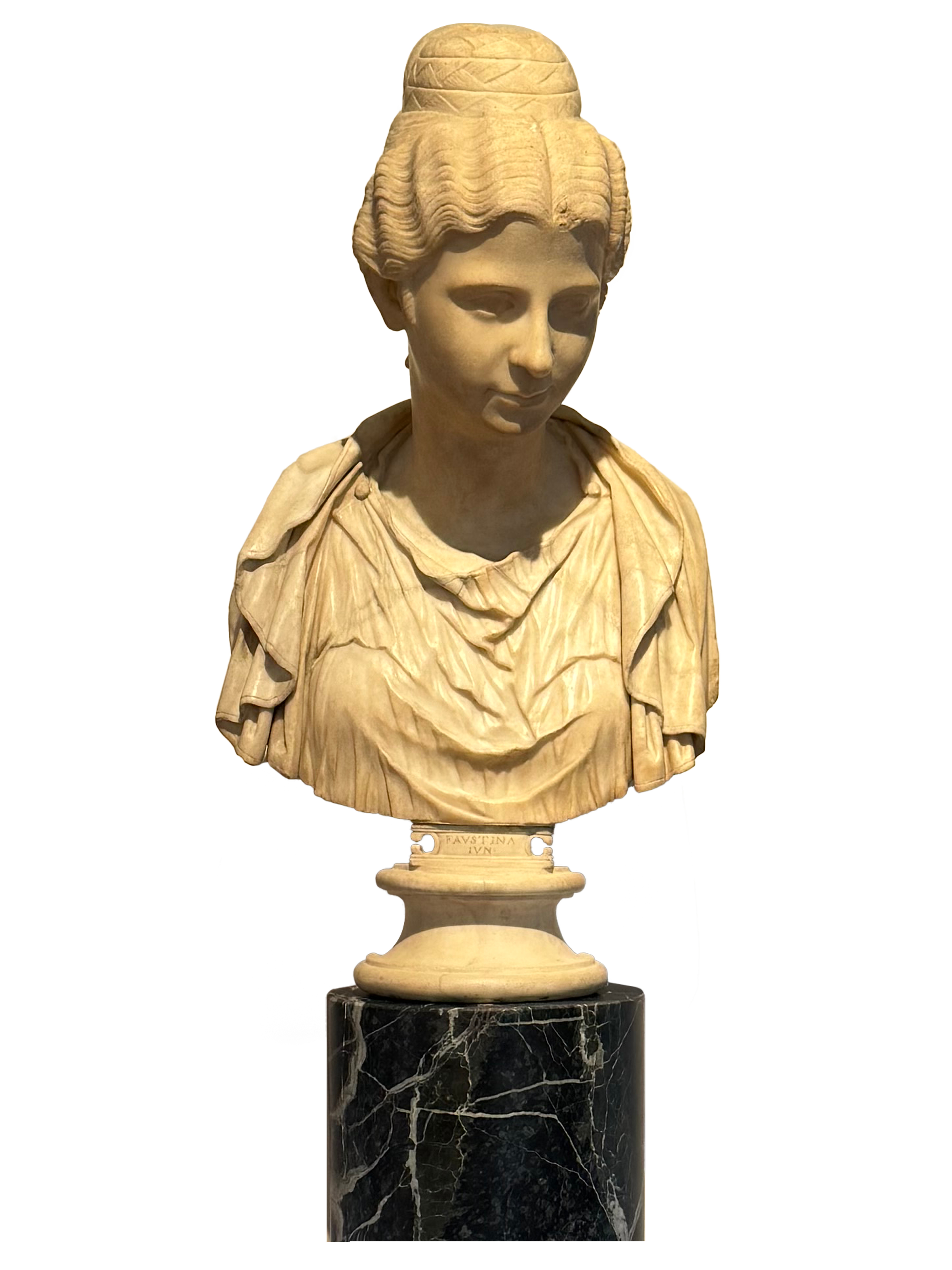
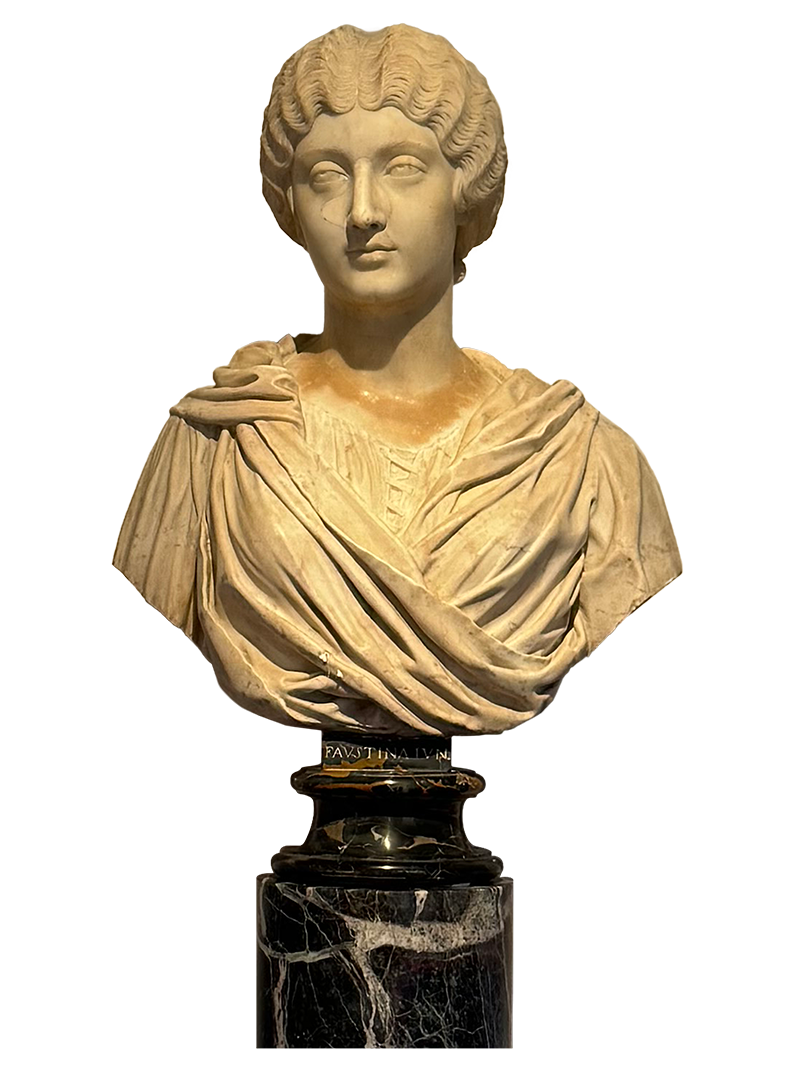
Portrait of Faustina Minor

Inv. 1914 No. 173
17th century
statue photo
This sculpture, by an anonymous artist of the seventeenth century, is inspired by the models of the official portraiture of Faustina Minor, wife of Marcus Aurelius. It was not uncommon for collectors of the Renaissance and Baroque eras to commission contemporary sculptors to create extremely faithful reproductions of missing iconographic types to fill the gaps in the series of official portraits.

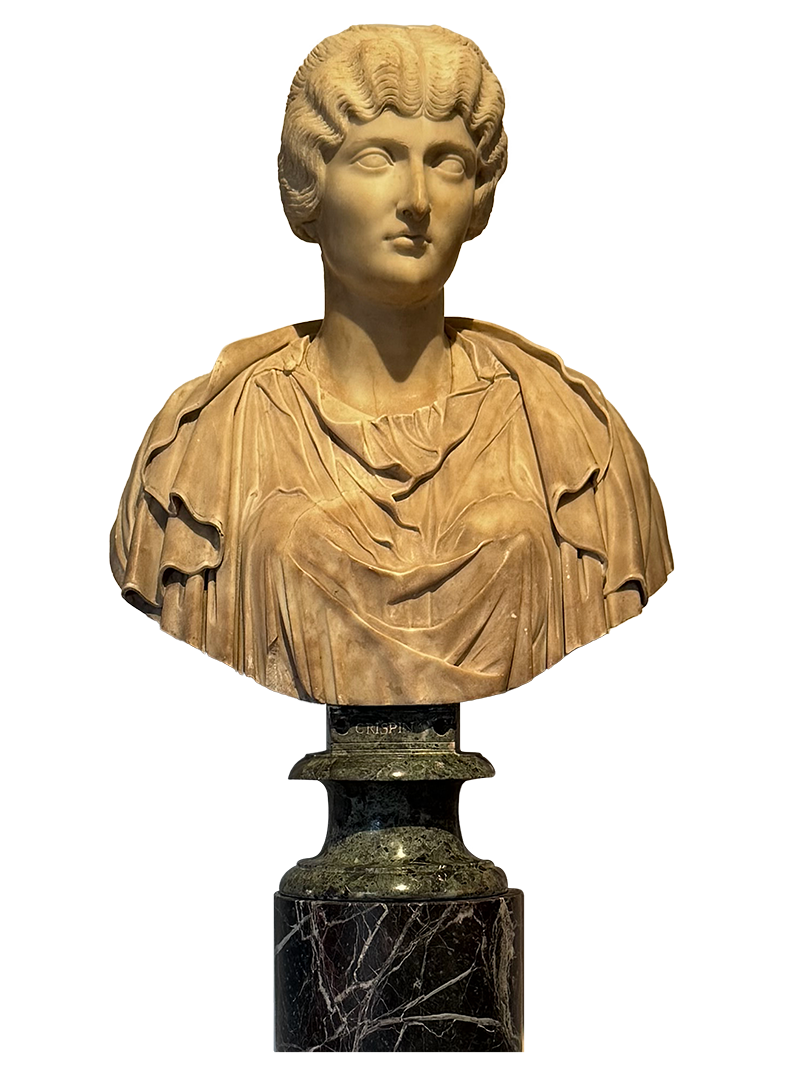
Portrait of the so-called Crispina

Inv. 1914 No. 198
17th century
statue photo
The effigy of Crispina, the wife of Emperor Commodus, is identifiable in this 17th-century portrait. This empress's image is primarily known from the coins, and the anonymous Baroque artist, in fact, opted to be generally inspired by sculptural models from the second half of the second century A.D, echoed by the woman's hairstyle.

Portrait of an Unknown Man

Inv. 1914 No. 348
Beginning of the 1st century A.D.
statue photo
The work only arrived in the Gallery in 1889, coming from the Villa del Poggio Imperiale in Florence, where it had been part of the furnishings until then. The head, the only part with ancient origins, prominently recalls the late Republican realism. Nevertheless, the precise delineation of the locks allows the portrayal of this anonymous character to be placed in the first few decades of the first century A.D.

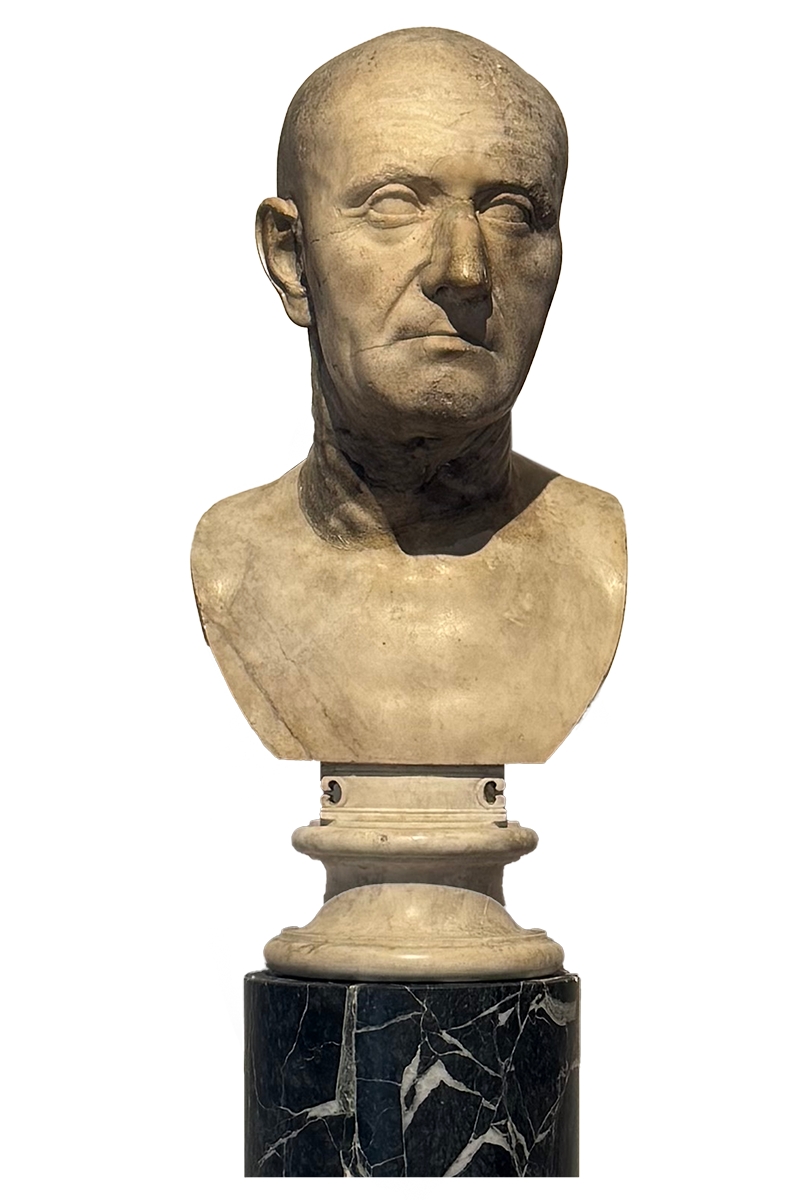
Portrait of an Elderly Man 'velato capite'

Inv. 1914 No. 367
last quarter of the 1st century B.C.
statue photo
The deep hollows at the temples and on the cheeks help to accentuate the severe and concentrated expression of the man who, judging by the flap that envelops his head ('velato capite'), is engaged in a sacred act. Comparisons with some portraits of the late Republican hyperrealistic movement allow this portrait to be framed in the last years of the first century B.C.

Portrait of an Unknown Man

Inv. 1914 No. 349
200-220 A.D.
statue photo
The portrait, long preserved in the Villa di Poggio Imperiale in Florence, offers an accomplished example of a fashion in hair and beard styles that spread in Rome between the end of the second century A.D. and the beginning of the following century. The model of the flowing hair and long beard was perhaps inspired by the iconography of barbarians or Cynical philosophers.

Portrait of Sabina

Inv. 1914 No. 161
Around 130 A.D.
statue photo
Registered in the Gallery since the early eighteenth century, this portrait captures the likeness of Vibia Sabina, the spouse of Emperor Hadrian around 130 A.D. The portrait, with its strongly idealised features, is characterised by a hairstyle of late classical inspiration, derived from effigies of deities from the fourth century B.C.

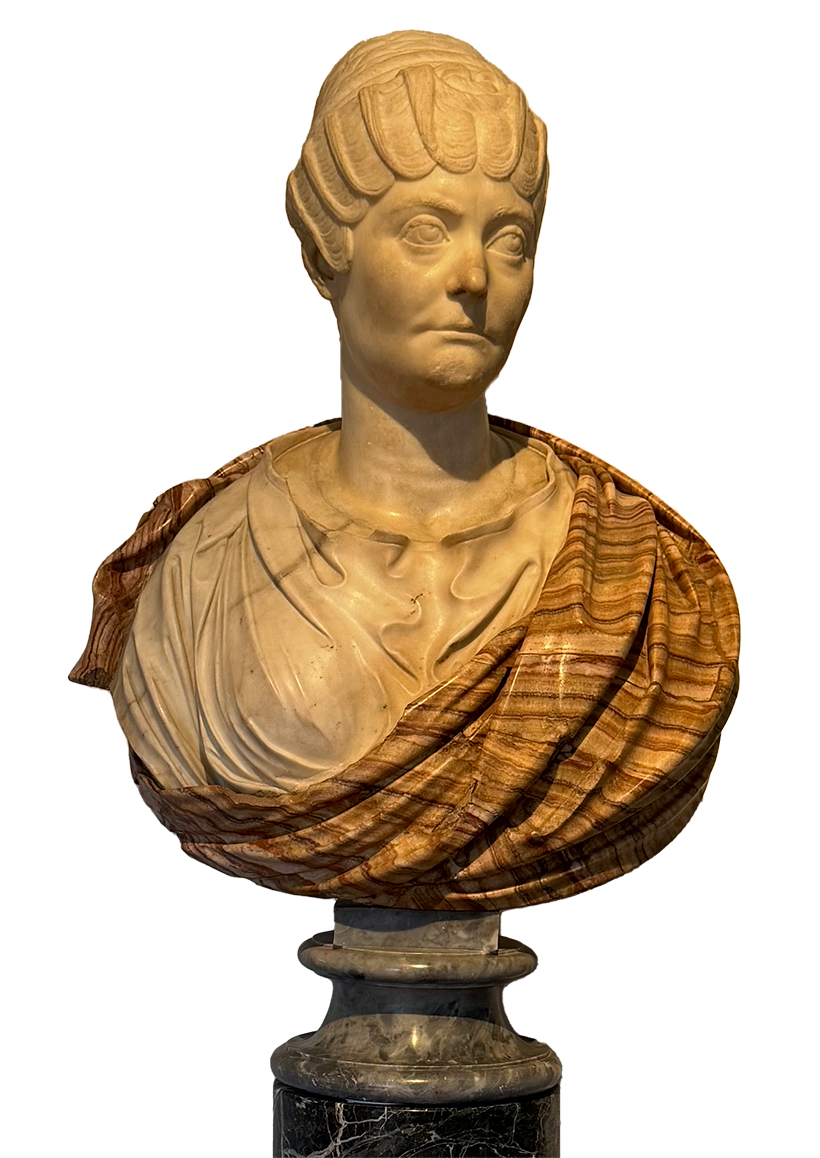
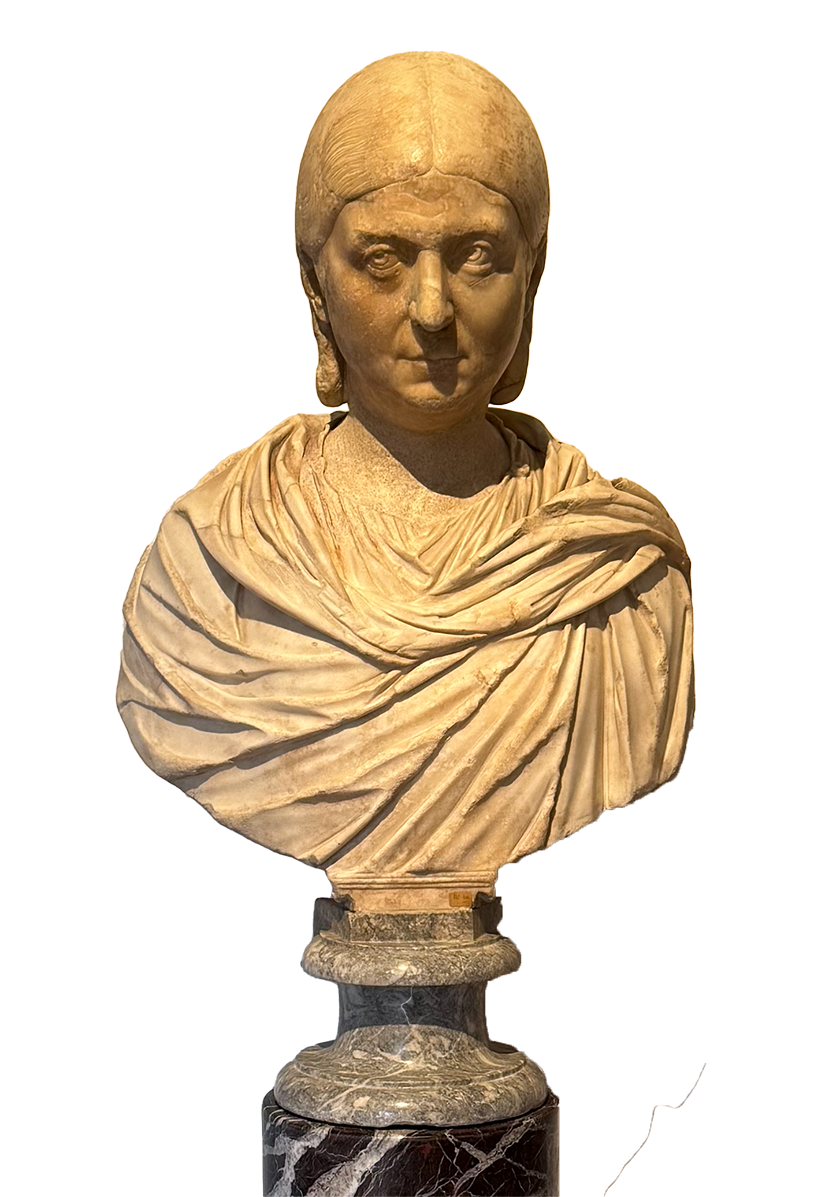
Portrait of a Vestal

Inv. 1914, No. 150
120-130 A.D.
statue photo
The bust, which arrived in Florence at the end of the eighteenth century and was already mistakenly identified as Plotina, depicts a middle-aged vestal virgin. The elaborate hairstyle, wrapped in a wool bandage (infula), recalls the priestly role assumed by the woman; however, the suffibulum, the typical shawl worn on the head by the vestals, is absent.

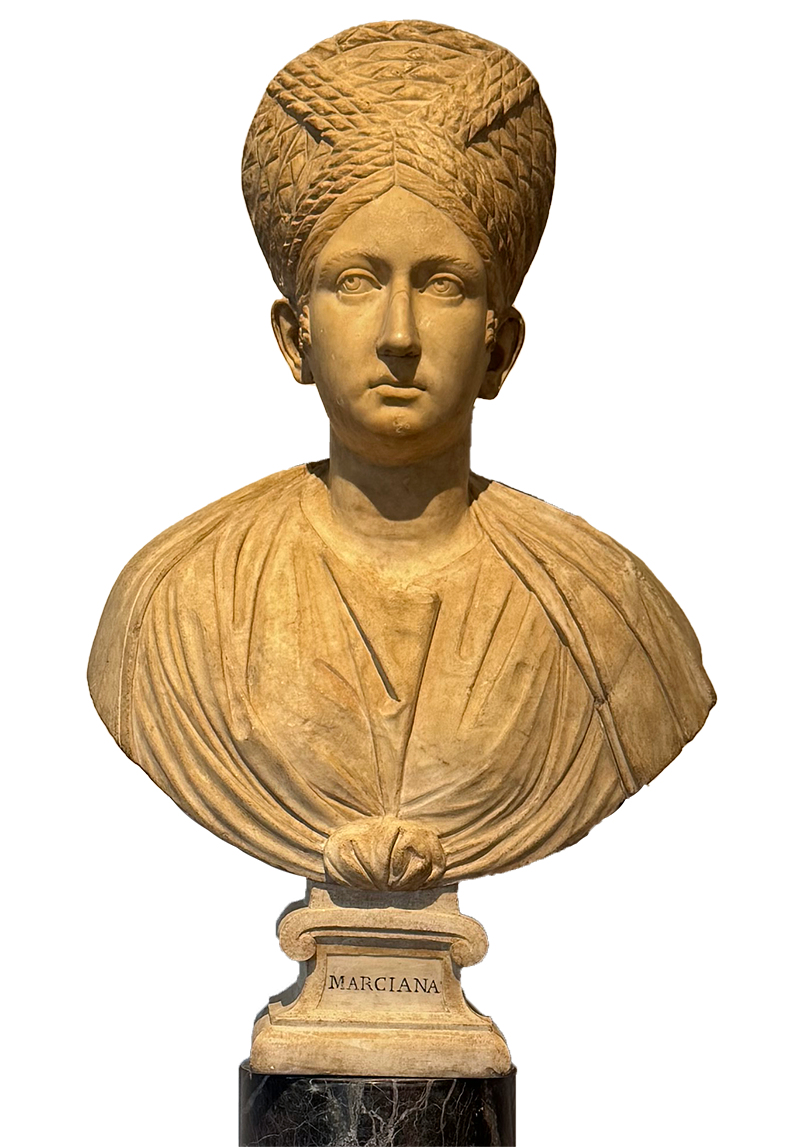
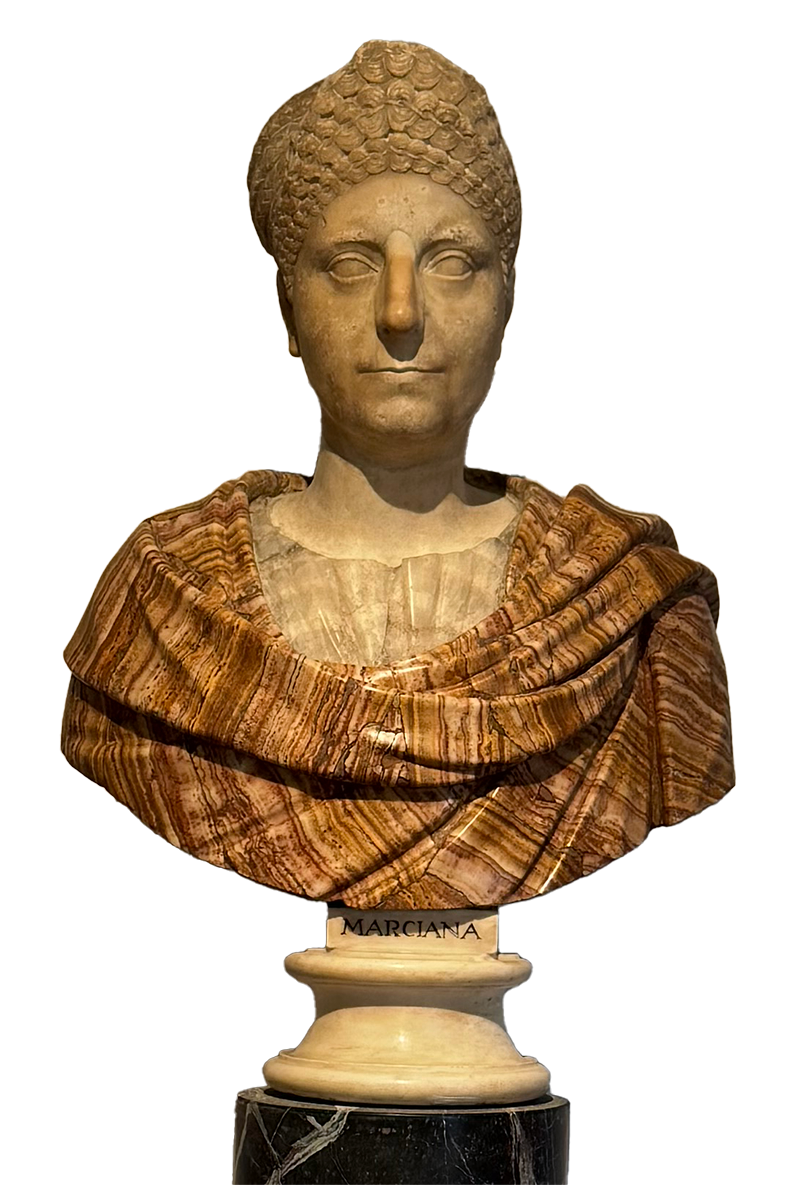
Portrait of Marciana

Inv. 1914 No. 143
16th-17th century
statue photo
In this portrait, an anonymous Renaissance sculptor wanted to depict Marciana, the beloved sister of Emperor Trajan. In fact, the bust is far not only from the portrait models of Augusta, but also from the types of female hairstyles customarily used between the first and second centuries A.D.

Portrait of a Young Man

Inv. 1914 No. 236
Second quarter of the 3rd century A.D.
statue photo
This bust, arriving from Villa Medici in the 1780s, portrays a young man with an introspective expression. Its hairstyle closely resembles that found in the official portraits of emperors from the first half of the third century A.D.

Portrait of Faustina senior

Inv. 1914 No. 346
Mid-second century A.D.
statue photo
This marble was recorded in the Gallery collections for the first time only in 1914, and its previous location remains unknown. The head, the only ancient part, provides us with an excellent replica of the official portrait of Empress Faustina Senior, wife of Antoninus Pius. The type called Dresden, on which the Florentine copy depends, was probably made immediately after the death of the woman, in 141 A.D, just three years after her husband had risen to power.

Portrait of a Young Boy

Inv. 1914 No. 174
160-180 d.C.
statue photo
The assumption that a bronze attributed to Desiderio da Settignano is a replica of this marble would indicate that the work was already familiar in fifteenth-century Florence. According to another hypothesis, however, this superb portrait from the late Antonine period should be recognised as a marble donated in 1488 to Lorenzo the Magnificent and found in the vicinity of Ostia.

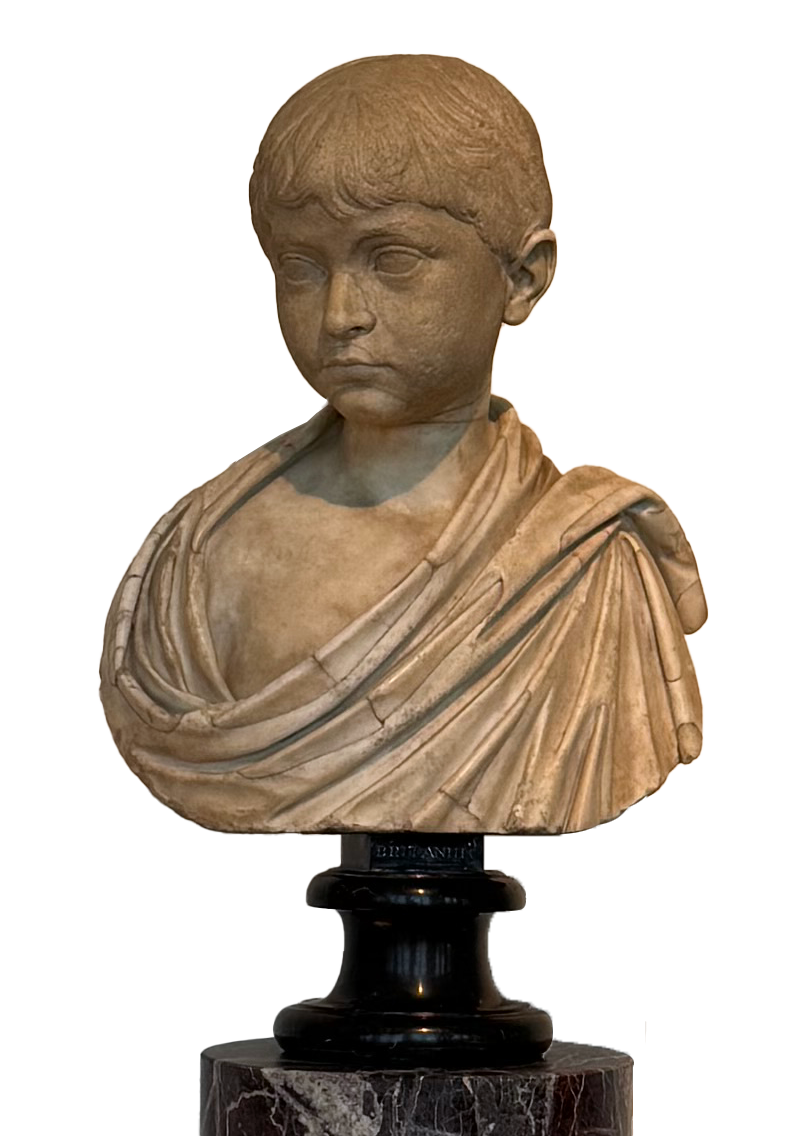
Portrait of the so-called Britannicus

Inv. 1914 No. 95
Mid-first century A.D.
statue photo
This portrait of a child had belonged to the Gaddi collection and was acquired by the grand ducal collections only in 1778. Traditionally identified with Marcus Aurelius as a child, it was recognized by Luigi Lanzi,as an effigy of Britannicus, the son of the emperor Claudius. Although it is not a portrait of that character, the haircut and stylistic features actually refer to the last years of the Julio-Claudian dynasty.

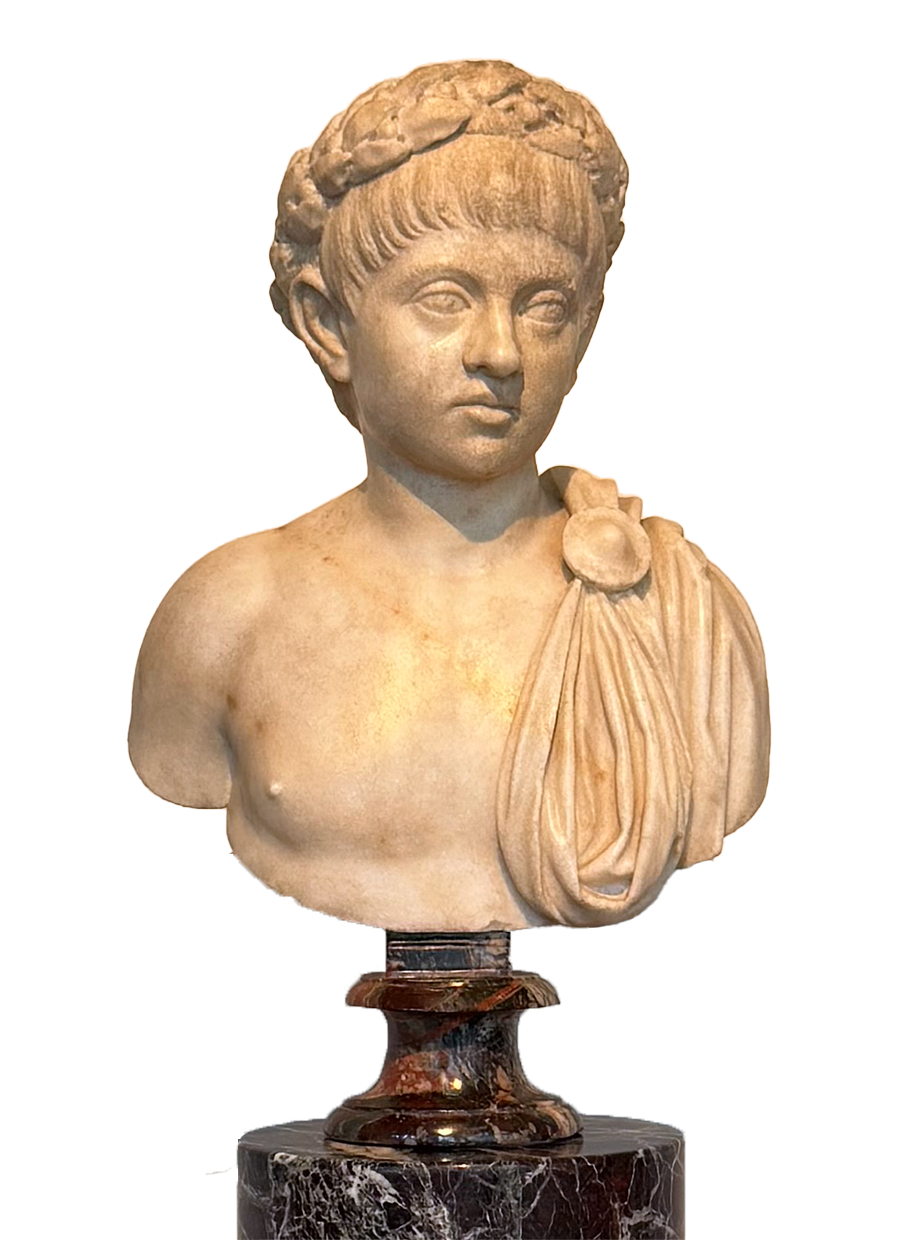
Bust with Portrait of a crowned child

Inv. 1914 No. 1029
Second quarter of the 2nd century A.D.
statue photo
It is a funerary portrait, as evidenced by the crown that equates the boy with a deified hero. The rendering of the hairstyle and the surface treatment allow the work to be attributed to the full age of Hadrian.

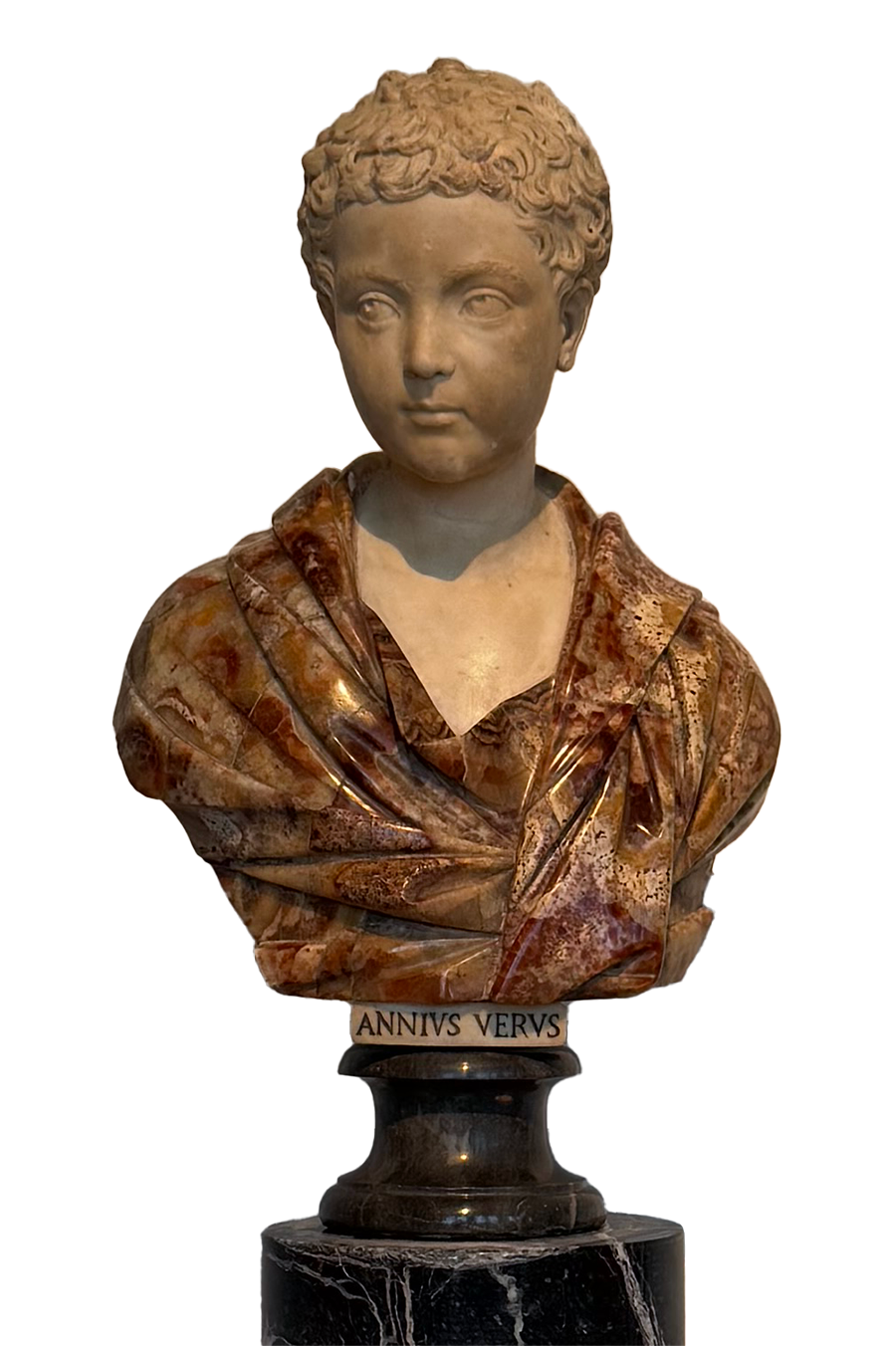
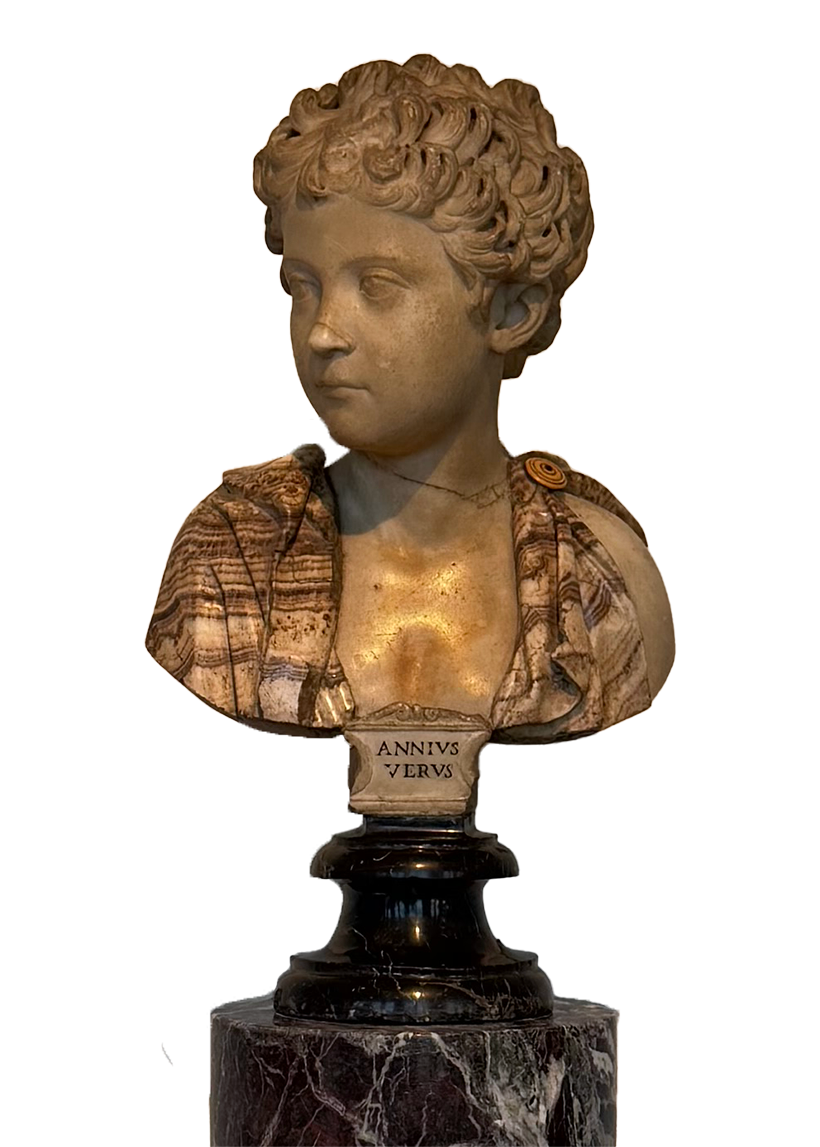
Portrait of the so-called Annius Verus

Inv. 1914 No. 158
160-180 A.D.
statue photo
The general physiognomic appearance of the child and the hair rendering, close to the portraiture of Commodus and his father Marcus Aurelius, make the relevance of the subject to the imperial family plausible. According to some scholars, one should really recognise the twin of Commodus, who died prematurely at just five years old in 165 A.D.

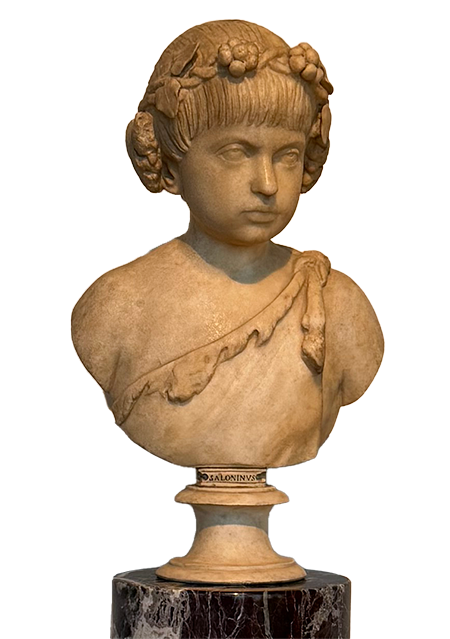
Bust of the so-called Salonino

Inv. 1914 No. 260
120-130 A.D.
statue photo
The small bust was part of Gaspero Gaddi's collection before joining the Gallery in 1778. It is a funerary image of a child characterised by Dionysian attributes (crown of vine leaves and 'pardalis', or panther skin) alluding to the hope of the child's rebirth to a new life.

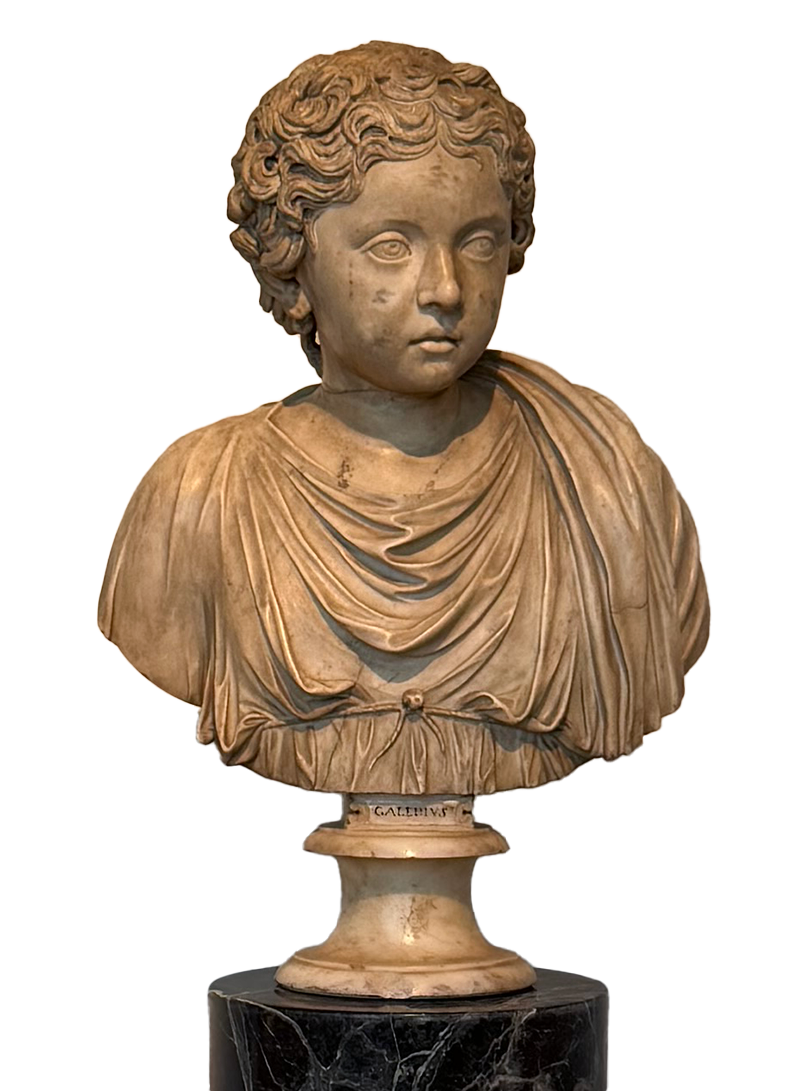
Portrait of the so-called Galerius

Inv. 1914 No. 157
140-160 A.D.
statue photo
The torso and a section of the neck are modern, as are parts of the ears, nose, and a small section of the hair at the back. As evidenced by the small tabula ansata, the portrait was mistakenly identified as that of Galerius Antoninus, one of the sons of Antoninus Pius and Faustina Major, who died prematurely.

Portrait of the so-called Elagabalus

Inv. 1914 No. 234
60-70 A.D.
statue photo
The bust was acquired by the Marquis Alessandro Capponi in 1780 at the behest of Luigi Lanzi, who recognised it as an effigy of Elagabalus, the ephemeral emperor of the early third century A.D. The treatment and shape of the hair show, on the other hand, clear echoes of the fashion in gradus formata (that is, with the hair styled to form waves), particularly loved in the Neronian period, allowing this refined portrait to be placed in the context of late Julio-Claudian sculpture.

Portrait an Unknown Woman

Inv. 1914 No. 61
Mid-second century A.D.
statue photo
The work, recorded in the Gallery since 1769, offers a splendid example of female portraiture from the mid-second century A.D. The rendering of the eyes and the refined profile of the face, however, betray a heavy reworking undergone by the portrait in the late antique period (early fourth century A.D,).

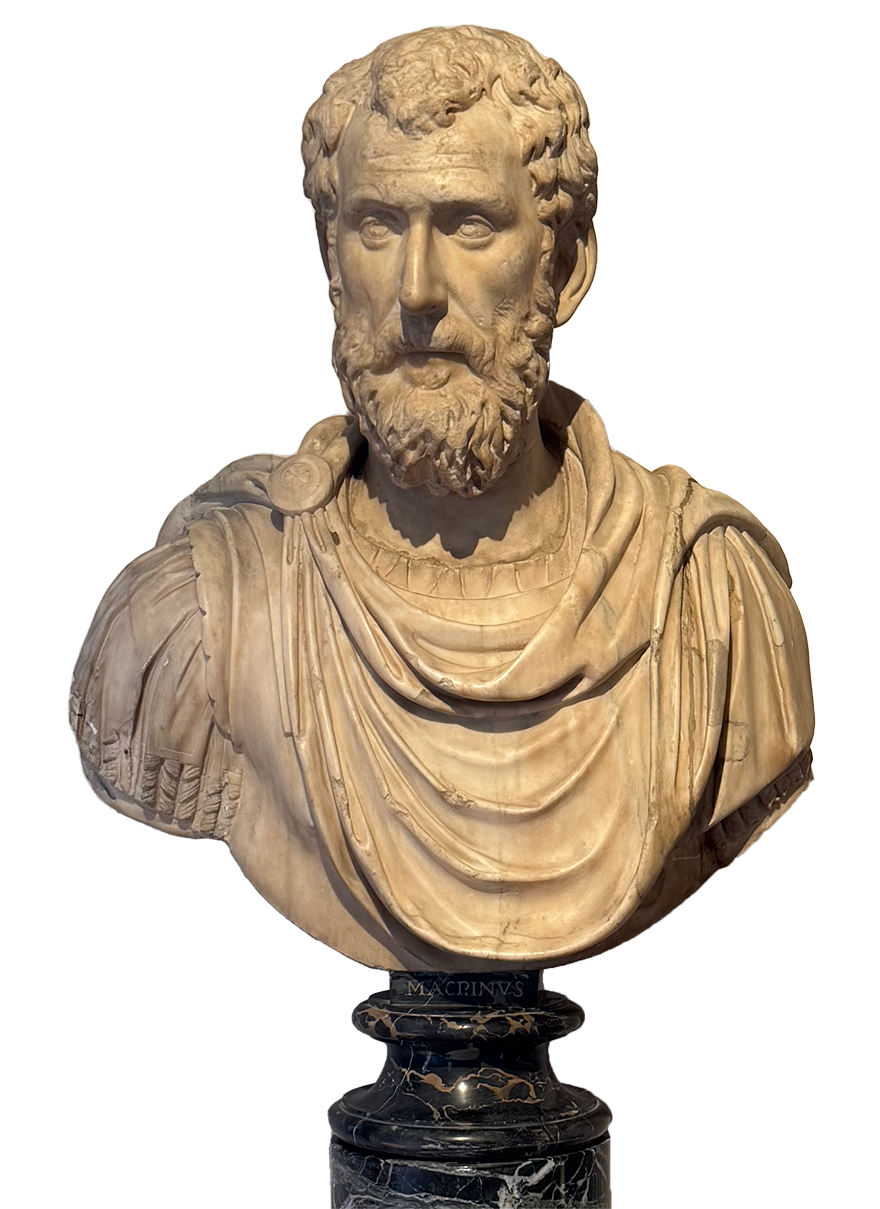
Bust of the so-called Macrinus

Inv. 1914 No. 228
230-250 A.D.
statue photo
Registered in the Gallery since the early 1700s, this portrait mirrors the characteristics of an unidentified individual from the early Gallienic period, as indicated by the unique depiction of the beard, which finds its closest formal comparison in the official portraits of that emperor.

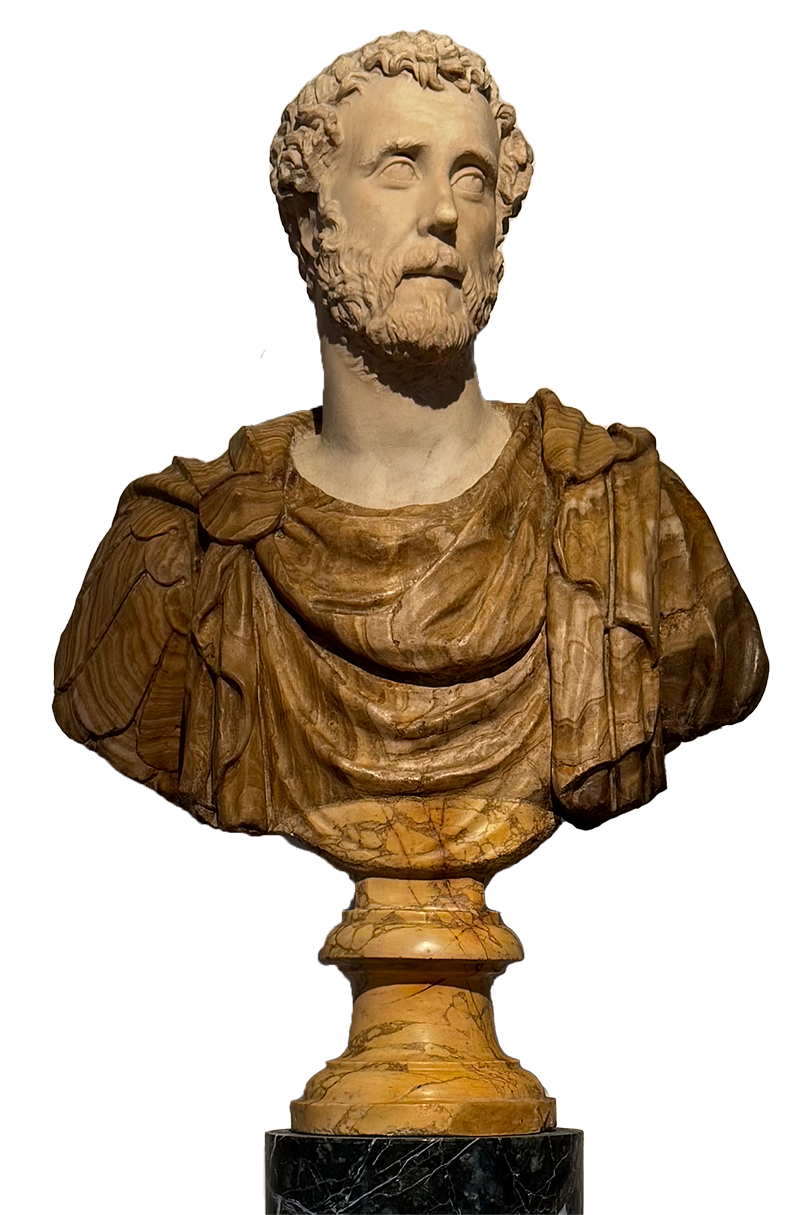
Portrait of Antonino Pio

Inv. 1914 No. 1
Mid-second century A.D.
statue photo
The bust arrived in Florence from Villa Medici in 1787. The splendid portrait is an excellent replica of the type called "Greek Cross Form", whose model was created at the time of the appointment of Antoninus Pius to the imperial succession (February 138 A.D.), just a few months before Hadrian died.

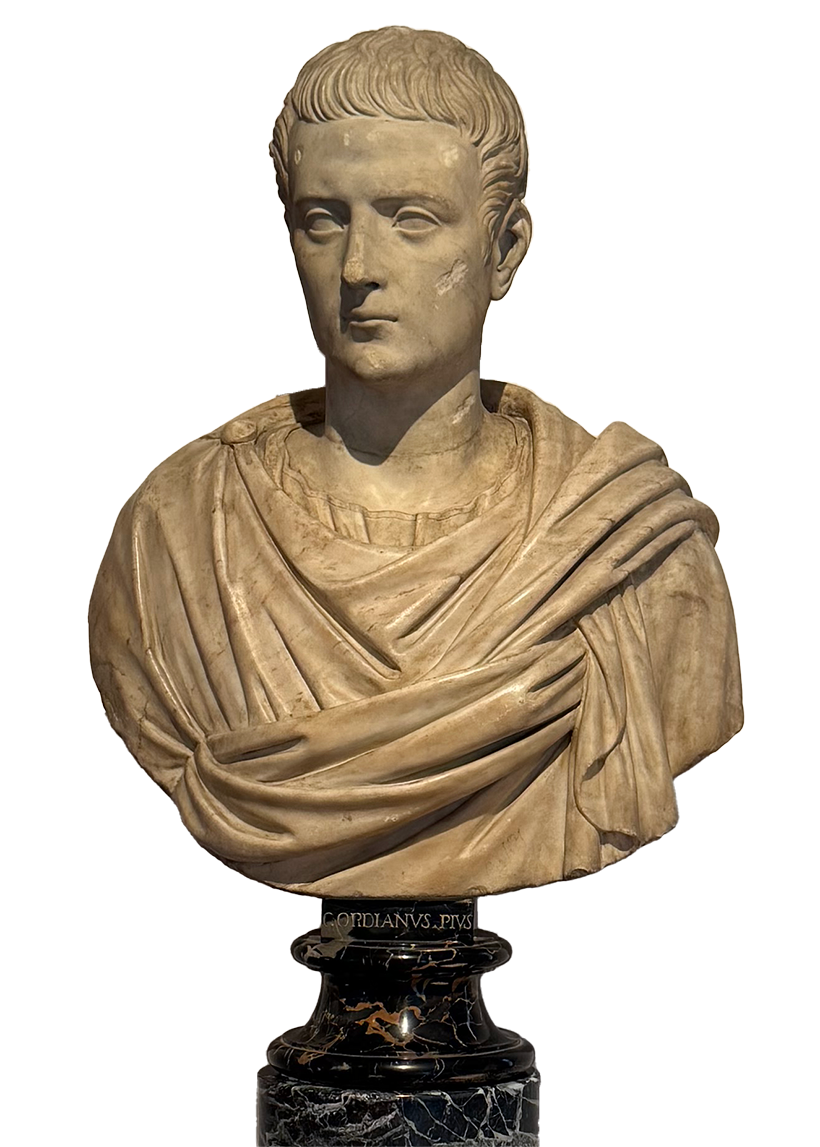
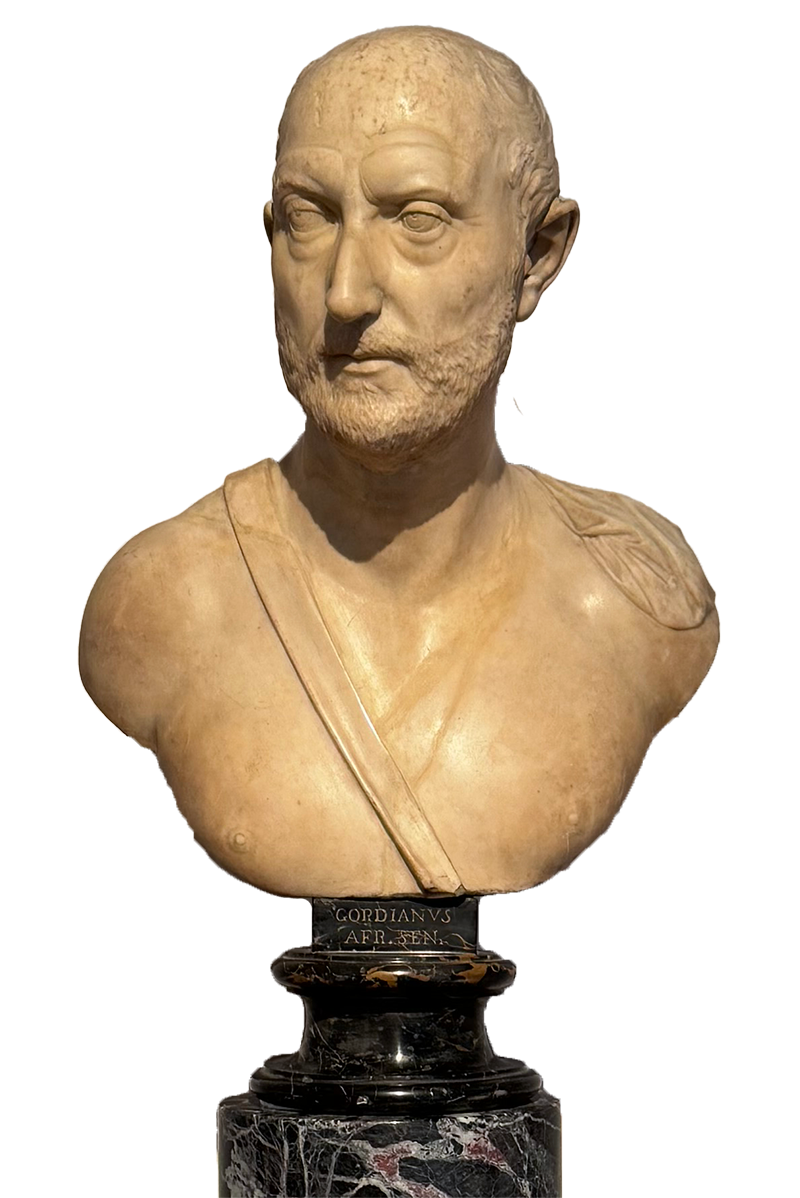
Portrait of the so-called Gordian Pius

Inv. 1914 No. 262
17th century
statue photo
This marble, registered in the Gallery from the mid-eighteenth century, was traditionally interpreted as an effigy of Emperor Elagabalus, who lived in the early third century A.D. It is, in fact, a pseudo-ancient piece generically inspired by portrait models of the first century A.D.

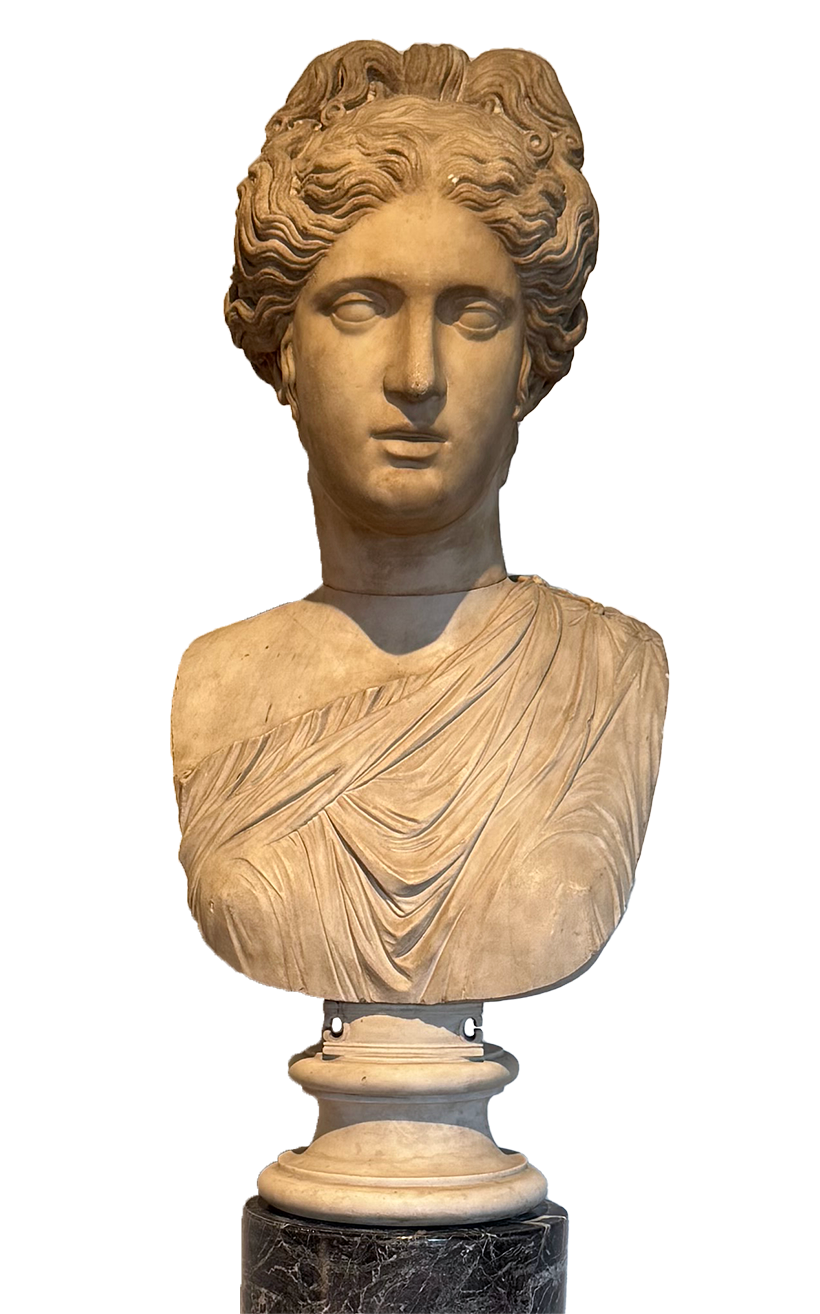
Bust with head of Aphrodite

Inv. 1914 No. 365
Mid-second century A.D.
statue photo
In the head, the only part dating back to ancient times, there exists a mid-second century A.D. Antonine copy of an effigy of the goddess Aphrodite. Particularly, the braids positioned on top of the head and tied into a bow-like shape are a unique feature of this goddess's iconographic representation.

Portrait of Domitia

Inv. 1914 No. 134
Beginning of the 2nd century A.D.
statue photo
Since 1704, the gallery has displayed the ancient head, reassembled on a modern bust. Thanks to the distinct physiognomy of her face and, most notably, the unmistakable 'beehive' wig situated on her forehead, we must identify this woman as Domitia Longina, the wife of Domitian. She is remembered in historical sources for her involvement in the conspiracy that resulted in her husband’s death. The depiction of the pupil engraved in the eyes of this portrait would, however, suggest a dating of the work to at least the early Hadrianic period. This hypothesis is plausible if we consider that the empress had a particularly long life, and probably died around 128 A.D.

Portrait of an Unknown Woman

Inv. 1914 No. 548
Second quarter of the 3rd century A.D.
statue photo
This portrait of an unknown man, registered in the Gallery from the mid-eighteenth century, can be traced with good probability to the thirties of the third century A.D. due to the type of hairstyle, called Nestfrisur (net hairstyle), first attested in the portraiture of Iulia Domna and then widely used throughout the first half of the century.

Portrait of a Young Man

Inv. 1914 No. 176
140-160 A.D.
statue photo
Entering the Gallery in 1778, the small bust reproduces the features of a young man with an inspired and melancholic appearance. The portrait clearly draws inspiration from the official depictions of the young Marcus Aurelius (Kronprinz type) from the mid-second century A.D. However, the absence of an exact match with the emperor's features suggests this marble represents an anonymous contemporary.

Portrait of the so-called Gordian I

Inv. 1914 No. 259
130-140 A.D.
statue photo
The portrait, registered in the Gallery since 1704, was initially placed in the first corridor, from where it was transferred to the third during the arrangement conducted by Luigi Lanzi. The sculpture, whose physiognomy differs considerably from that of Gordian I, fits well within the portraiture of the late Hadrian era, especially due to the pattern of the hair and the sensitive rendering of the beard, which differs from the peculiar ‘pen’ technique of the following century.

Portrait of the so-called Marciana

Inv. 1914 No. 137
Beginning of the 2nd century A.D.
statue photo
Registered in the Gallery since the mid-eighteenth century, this portrait was identified as an effigy of Marciana, Trajan's sister. While the hairstyle and the formal treatment of the surfaces suggest an artistic period similar to that of Trajan, the facial features rule out this identification and point instead to an anonymous contemporary.

Bust with head of an Unknown Woman

Inv. 1914 No. 387
Mid-second century A.D.
statue photo
The bust has been registered in the Gallery collections since the early eighteenth century. The head, the only component from ancient times, depicts the face of an aged woman, notable for a hairstyle resembling a simplified style favoured by mid-second century A.D. empresses.

Portrait of an Unknown Man

Inv. 1914 No. 2
First half 2nd century A.D.
statue photo
The head, the only ancient component, reveals to us the features of a character with a wavy and slightly shaded beard that, together with the forehead marked by deep wrinkles, seems to bring him closer to portraits of philosophers. The distinctive beard shape implies the portrait belongs to the Hadrianic age, a time when the concept of a man dedicated to intellectual thought and speculation is similarly represented in private portraiture.

Portrait of Julio-Claudian Princess

Inv. 1914 No. 37
Mid-first century A.D.
statue photo
The splendid portrait, larger than life, reproduces the features of a Julio-Claudian princess in whom, according to some, Agrippina, the fourth wife of Claudius and mother of Nero, and, according to others, Messalina, the third wife of that same emperor, should be recognized.

Portrait of Cicero

Inv. 1914 No. 352
First half 1st century A.D.
statue photo
The Florentine replica of the portrait of the famous orator is to be counted among the best to have reached us. The work, which is characterised by a marked dynamism and an accentuated facial mimicry inspired by the models of the portrait of Menander, offers one of the most complete examples of the influence of the Hellenistic tradition on late Republican sculpture.